it / en
it / en

Beryls: different shapes, same beauty

Discover the charm of emeralds and aquamarines
In the world of precious gemstones, some possess a subtle yet enduring charm, capable of captivating the observer without the need for excess. Among these stand the beryls, one of the most valued mineral families in gemmology, appreciated both for its broad chromatic range and for the technical characteristics shared by all its varieties.
 
The name itself is ancient: “beryllos” appears in Greek and Latin texts as a term used to describe any greenish-blue stone, without a precise mineralogical distinction. Only with the development of modern gemmology has beryl been defined with accuracy, gaining a clear and structured scientific classification. Its two most renowned varieties are undoubtedly emeralds and aquamarines, though the group includes numerous additional variations that help delineate its full mineralogical profile.
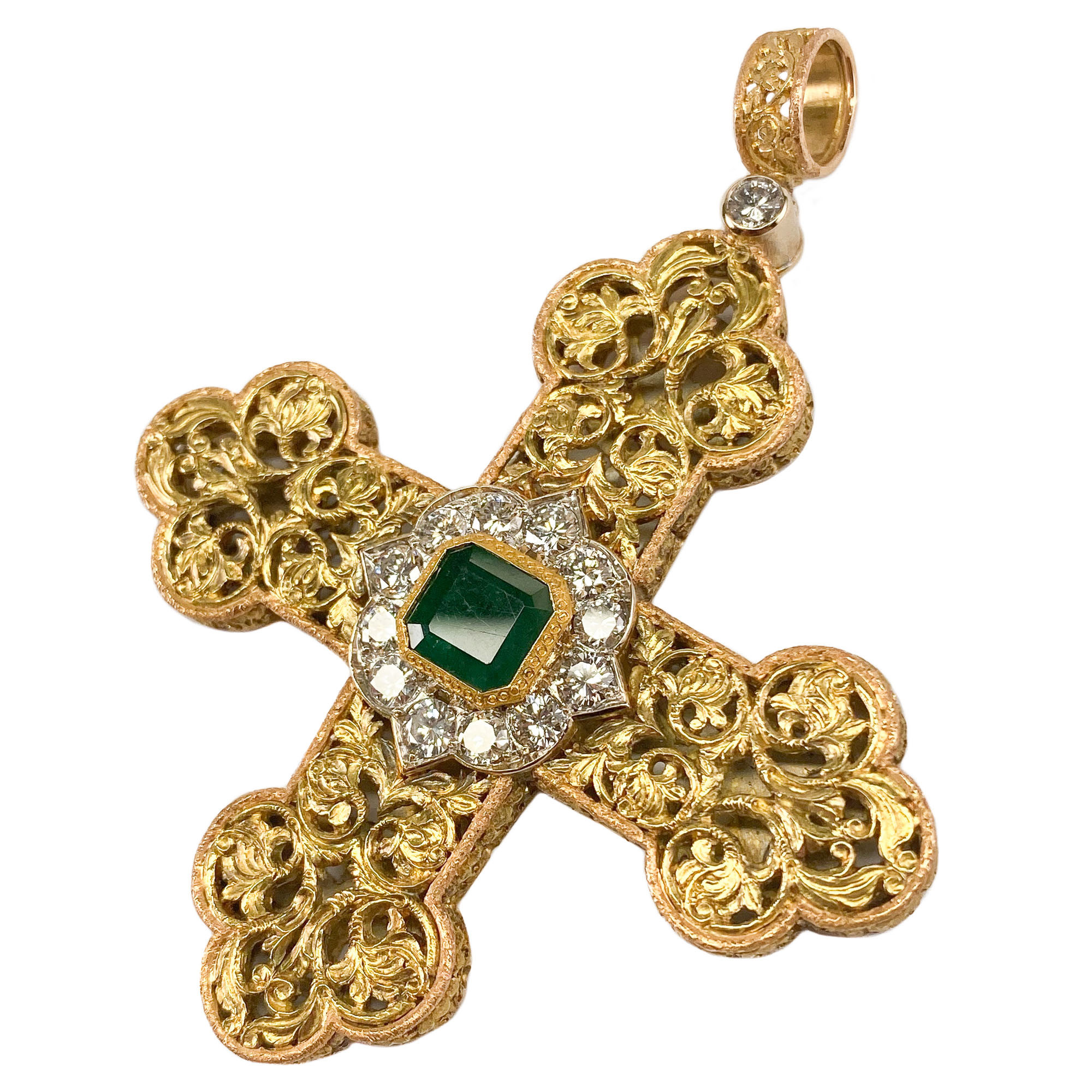
Pendant with emerald
Italy, 1960s
STRUCTURE AND COMPOSITION
 
From a technical perspective, this gemstone is a beryllium aluminium silicate (Be₃Al₂Si₆O₁₈) whose crystals form an ordered and stable hexagonal structure. In its purest form, beryl is transparent and colourless; however, its internal architecture allows for remarkable chromatic variety when even tiny amounts of other elements substitute atoms in its chemical structure.
 

Chromium and vanadium produce green hues; iron, in different oxidation states, generates blue or yellow tones; manganese gives rise to pleasant shades of pink. Its hardness, ranging from 7.5 to 8 on the Mohs scale, places beryl among the materials suitable for daily wear in jewellery, although these gems need more cares than diamonds and corundums.
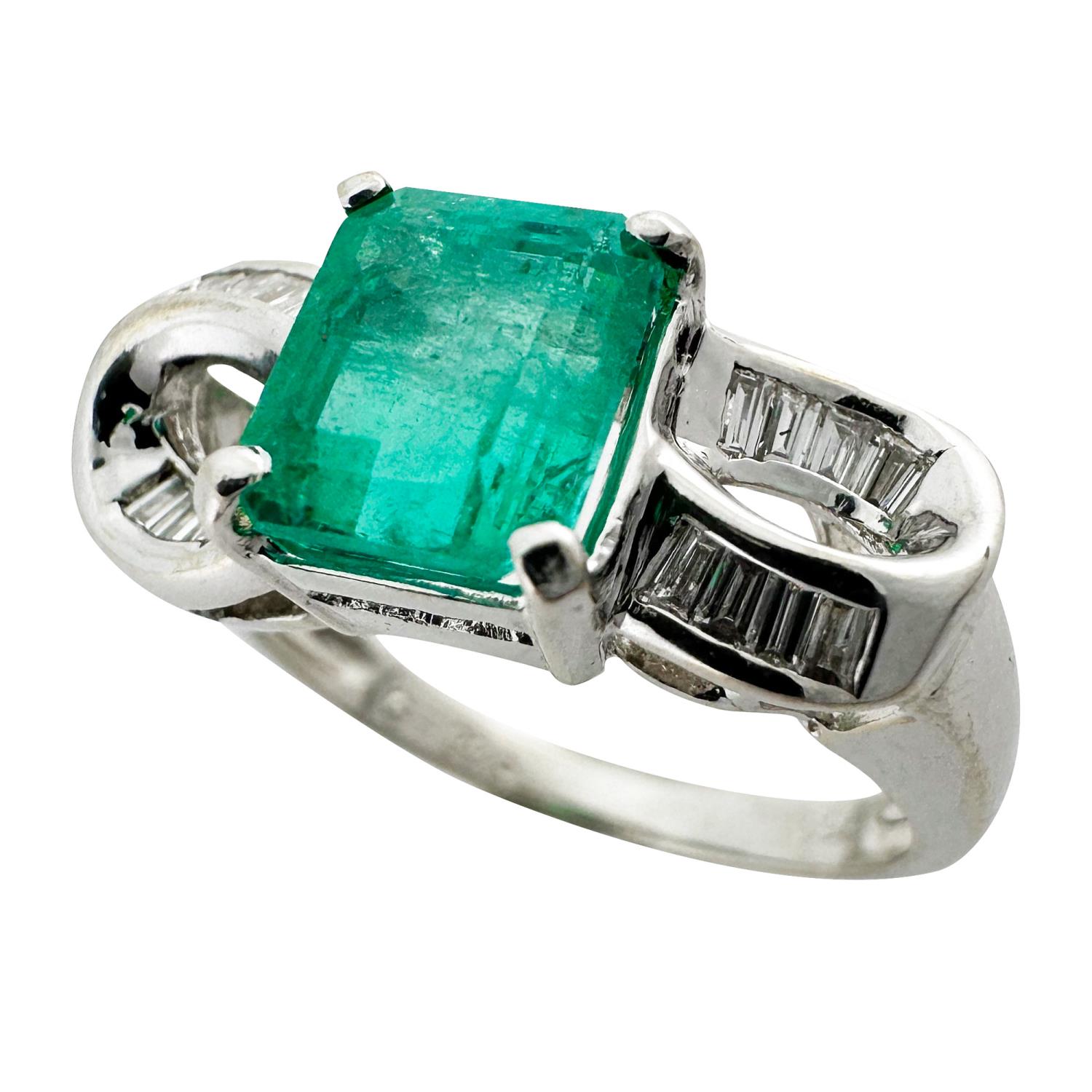
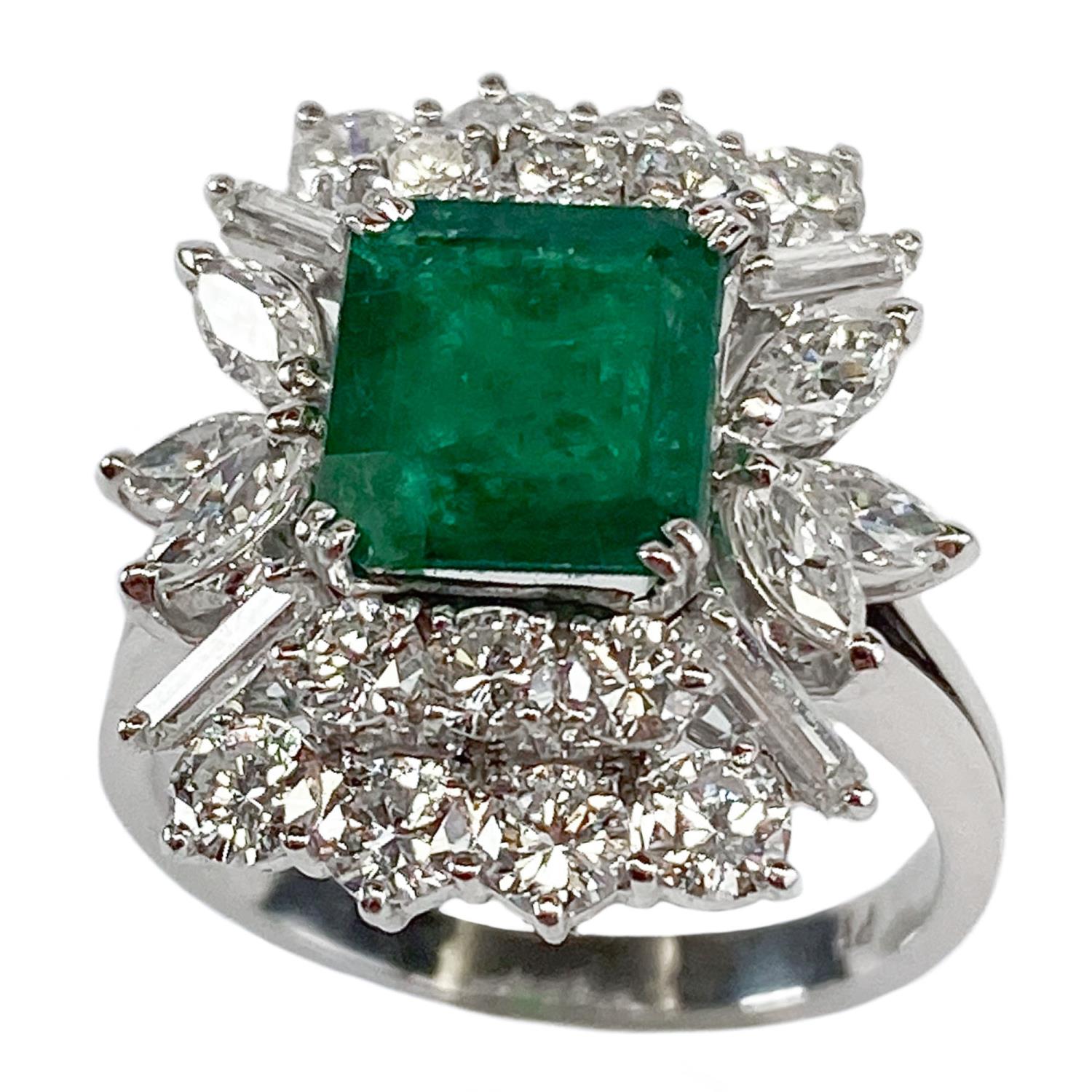
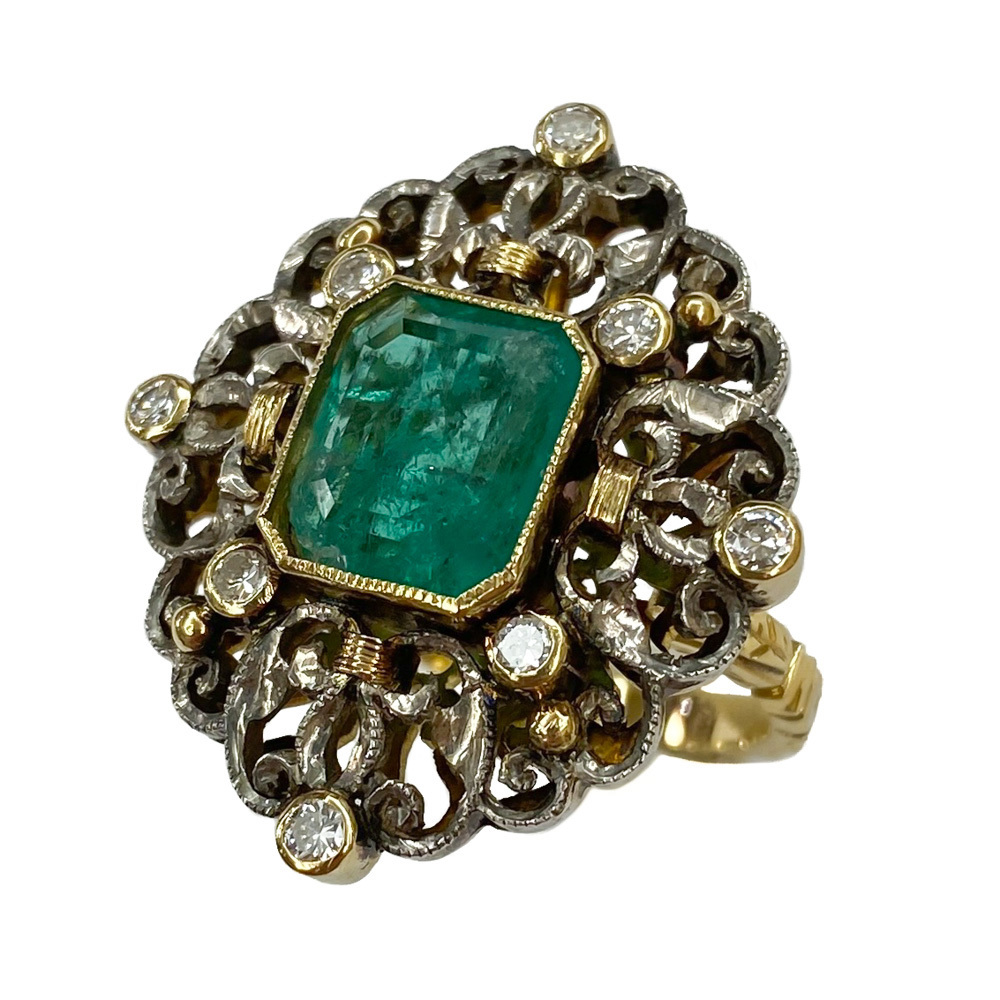
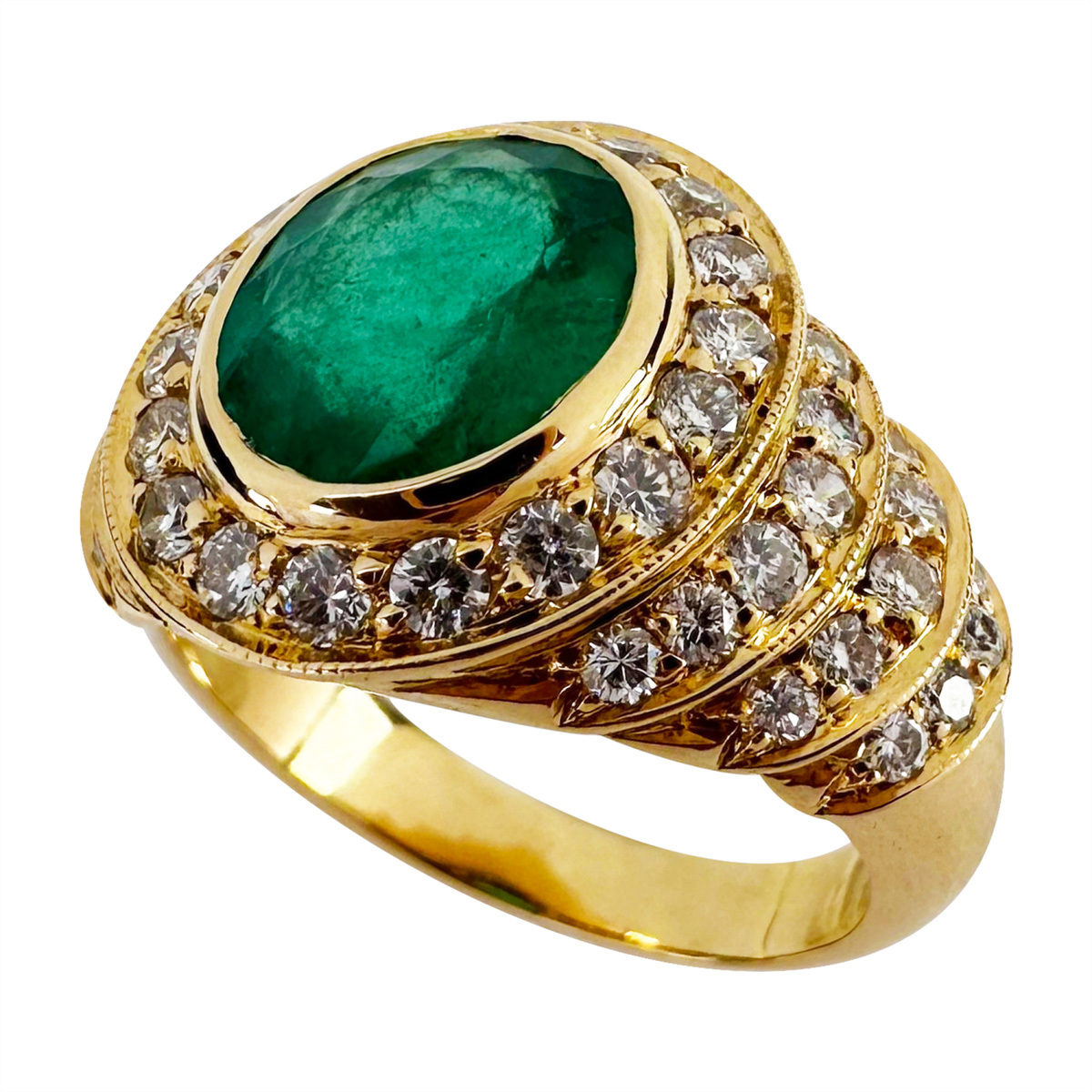
Ring with emerald and diamonds
Italy, 1980s
Ring with emerald and diamonds
Italy, 1950s
EMERALD
 
The king of this mineral family is undoubtedly the emerald, the green form of beryl that has long been regarded as one of the world’s most celebrated gemstones. From Cleopatra to medieval European courts, from the treasures of the Renaissance to the masterpieces of modern royal families, emerald has always been associated with vitality, renewal and prestige.
A key technical feature of emeralds is their high degree of internal fracturing. Their formation happens in particularly complex geological environments, often hydrothermal zones subjected to intense pressure and temperature, and this creates liquid, solid and gaseous inclusions, healed micro-fractures and small cavities that together form a true natural microcosm. In jewellery, this characteristic is referred to by the evocative French term jardin.
From a gemological point of view, the jardin is not considered a flaw, but an identification trait essential both for distinguishing natural emeralds from synthetic ones, since it documents a geological process impossible to replicate in the laboratory, and for assessing their geographic origin. Certain inclusions are, in fact, considered reasonably reliable indicators of provenance, although absolute certainty can be obtained only through advanced, often invasive, gemmological analyses.
 
 The mines of Colombia, particularly those of Muzo and Chivor, have for centuries been regarded as the sources of the finest emeralds in the world. (Their green colour displays a depth that appears almost internally luminous.) Other important gemmological areas include Zambia, Brazil, Ethiopia and Afghanistan, each offering emeralds with distinct optical and inclusion characteristics.
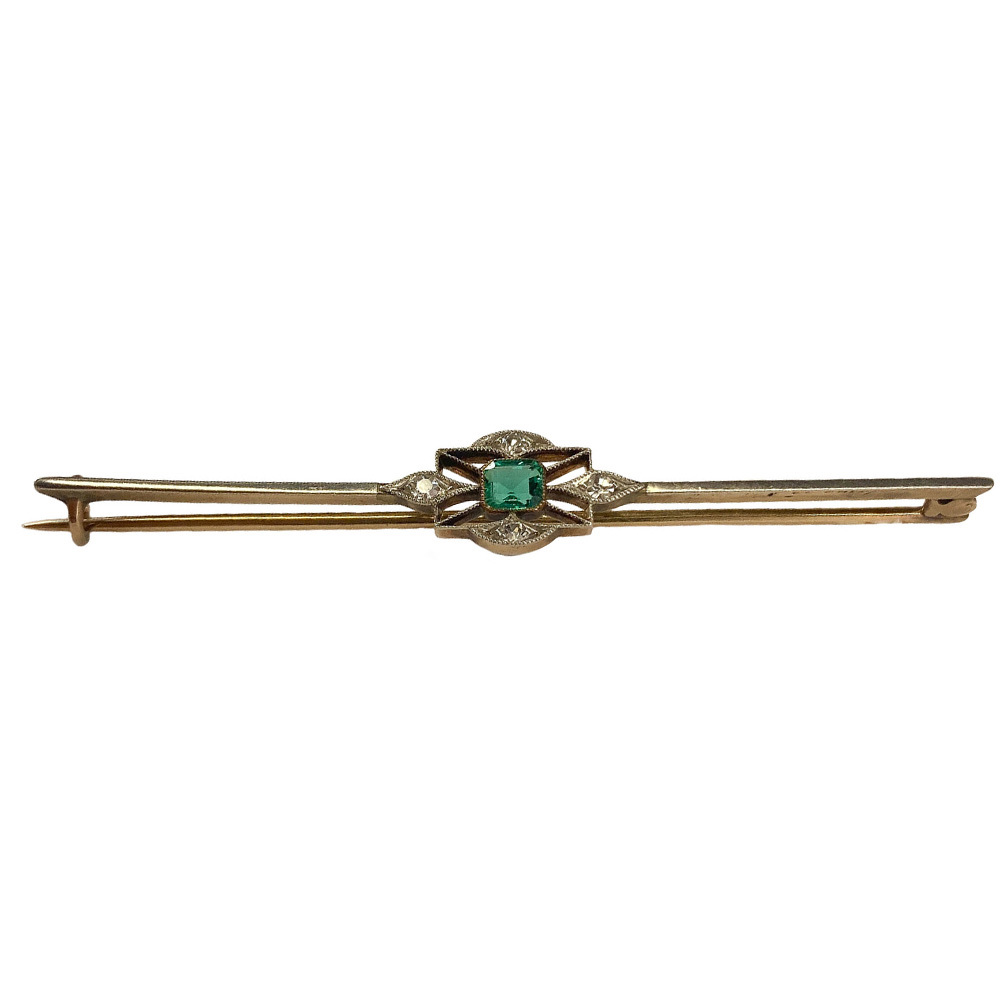
Spilla con smeraldi e diamanti Italia, anni ‘20

Anello con smeraldo e diamanti Italia, anni ‘70
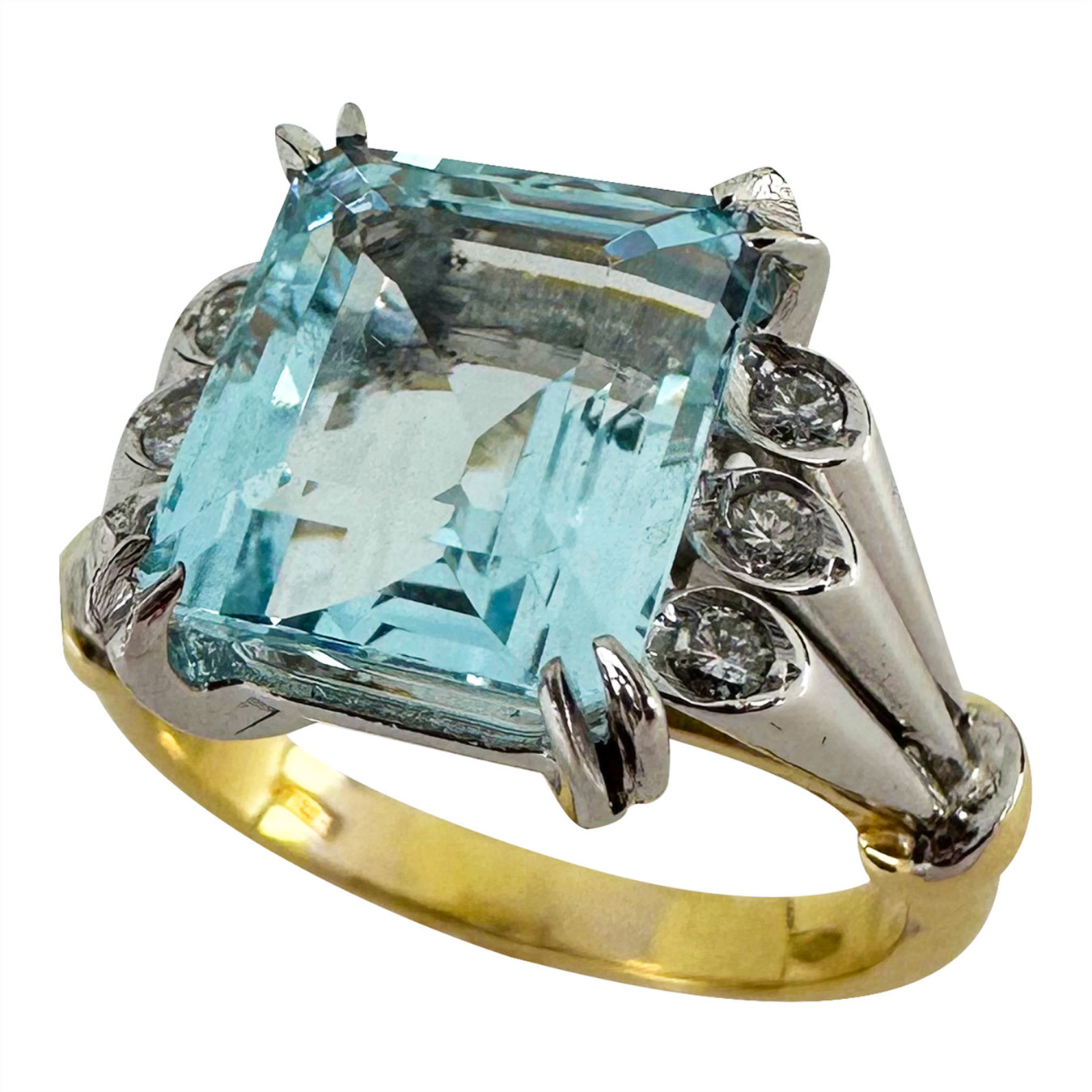
Anello con acquamarina e diamanti
Italia, anni ‘80
AQUAMARINE


Aquamarine is the blue variety of beryl and owes its colour to the presence of divalent iron. The chromatic range extends from very pale blue to more saturated shades, with bright, intense hues considered among the most desirable. Unlike emerald, aquamarine generally exhibits high transparency and a cleaner internal structure, with inclusions that are infrequent and usually not visible.


This clarity makes it particularly suitable for brilliant and geometric cuts: emerald cut, oval, cushion or more elaborate shapes. The finest aquamarines come largely from Brazil, especially from the mines of Minas Gerais, though high-quality deposits are also found in Pakistan, Madagascar, Nigeria and Mozambique.
In addition to the two principal varieties, the beryl family includes others that may be less commercially common but, nonetheless, they are gemmologically significant: pink morganite, yellow heliodor and colourless goshenite.
 
Each variety reveals a different aspect of the long geological journey that gave rise to these gems: emerald with its fine fractures recording millennia of pressure and tension; aquamarine with its clarity preserving the memory of ancient fluids; and morganite, heliodor and goshenite offer further nuances of the same mineralogical story.
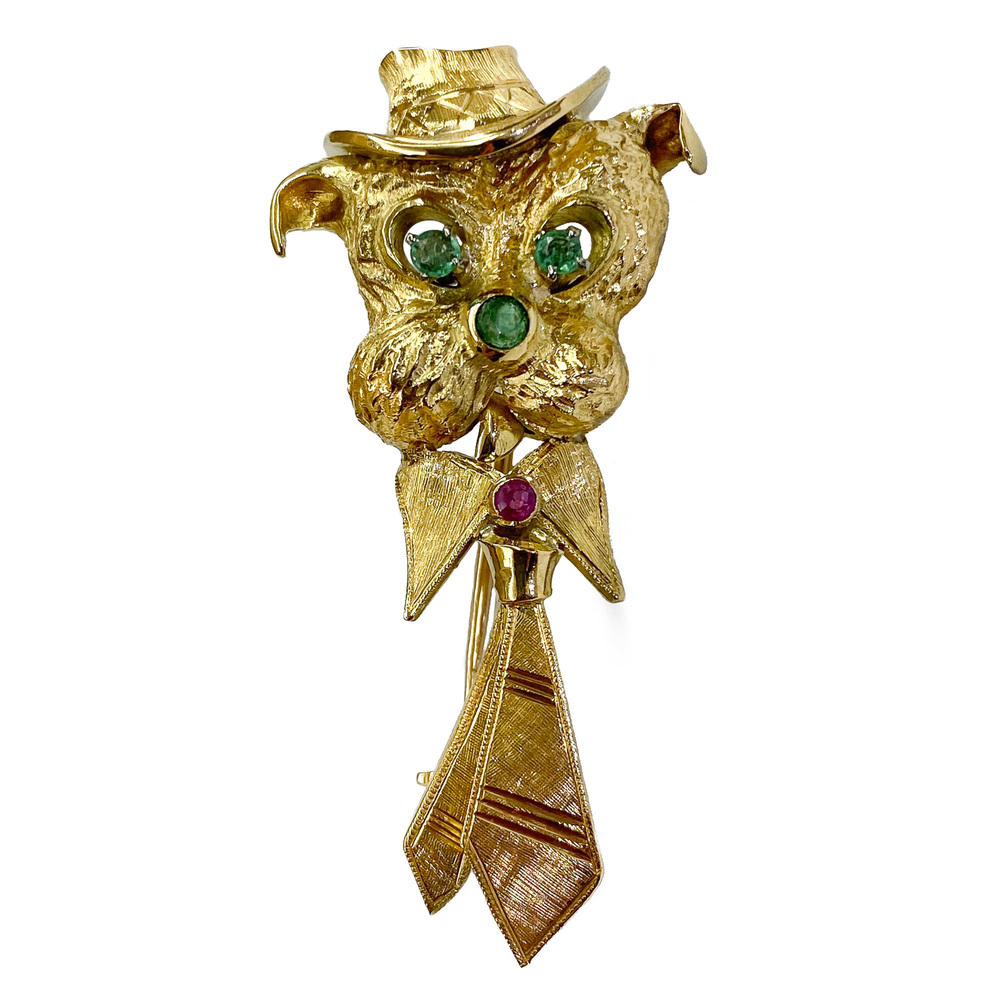
Brooch with emeralds and ruby
Italy, 1960s
Ring with emerald and diamonds
Italy, 1990s
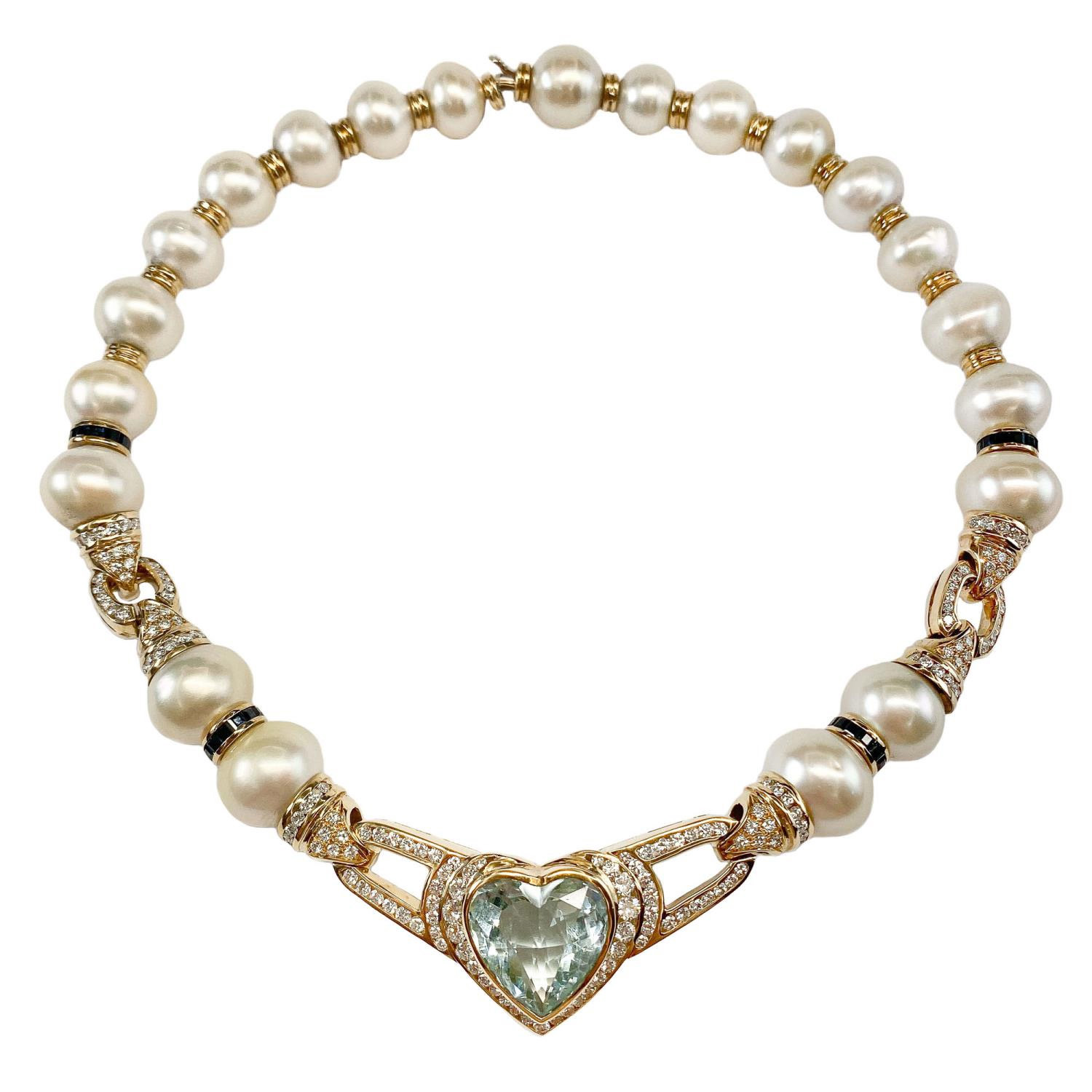
Necklace with acquamarine, pearls, diamonds and sapphiners
Italy, 1980s
To observe, handle, understand and wear beryls means engaging with a material that embodies both crystalline order and natural unpredictability.
 
These are minerals that unite precision and diversity, stability and variation, and it is precisely this balance that defines their appeal: not merely gems to study or set into jewellery, but tangible evidence of deep and ancient processes, capable even today of accompanying our gaze with quiet persistence.

Watch the video to get even closer to the world pf beryls and to theis fascinating caracteristics.

Become a Passionario

Chat with us