it / en
it / en

What are corundums?

Analysis of the most beloved gems in jewelry
In the vast world of gemstones, few minerals have fascinated as deeply as corundum. Although the term is rarely used outside of gemological circles, it refers to a mineral that has played a starring role in the history of jewelry since antiquity, thanks above all to its two most celebrated varieties: ruby and sapphire.
 
These two gemstones, which rank among the most prized in the world, may look entirely different at first glance. Yet chemically, they share the same formula and belong to the same mineral species: corundum. This scientific understanding, however, only came to light in the second half of the 19th century, when advances in analytical techniques allowed gemologists to classify stones on a more scientific way.
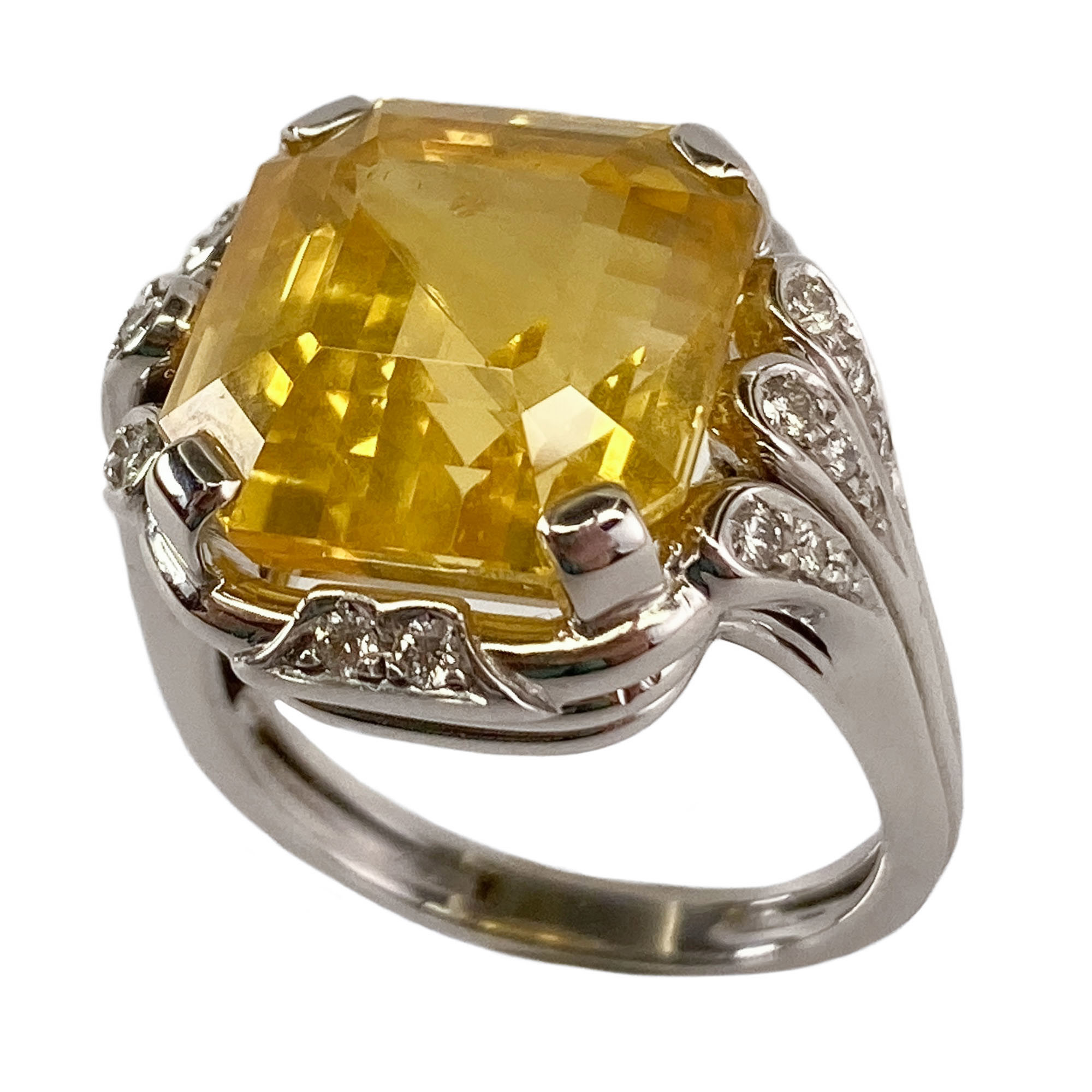
Ring with yellow sapphire and diamonds
Italy, 1970s
Before then, gems were primarily identified by their color and brilliance. For example, all transparent gems with an intense, bright red color were considered rubies, without scientific certainty of their actual nature. A striking example is the Black Prince’s Ruby, which is set on the British Imperial State Crown. Long thought to be one of the finest rubies ever discovered, it was later revealed to be a high-quality spinel. Today, nearly two centuries after the proper classification of corundum, the mineral is now recognized for its distinctive qualities, which set it apart in the realm of precious stones.
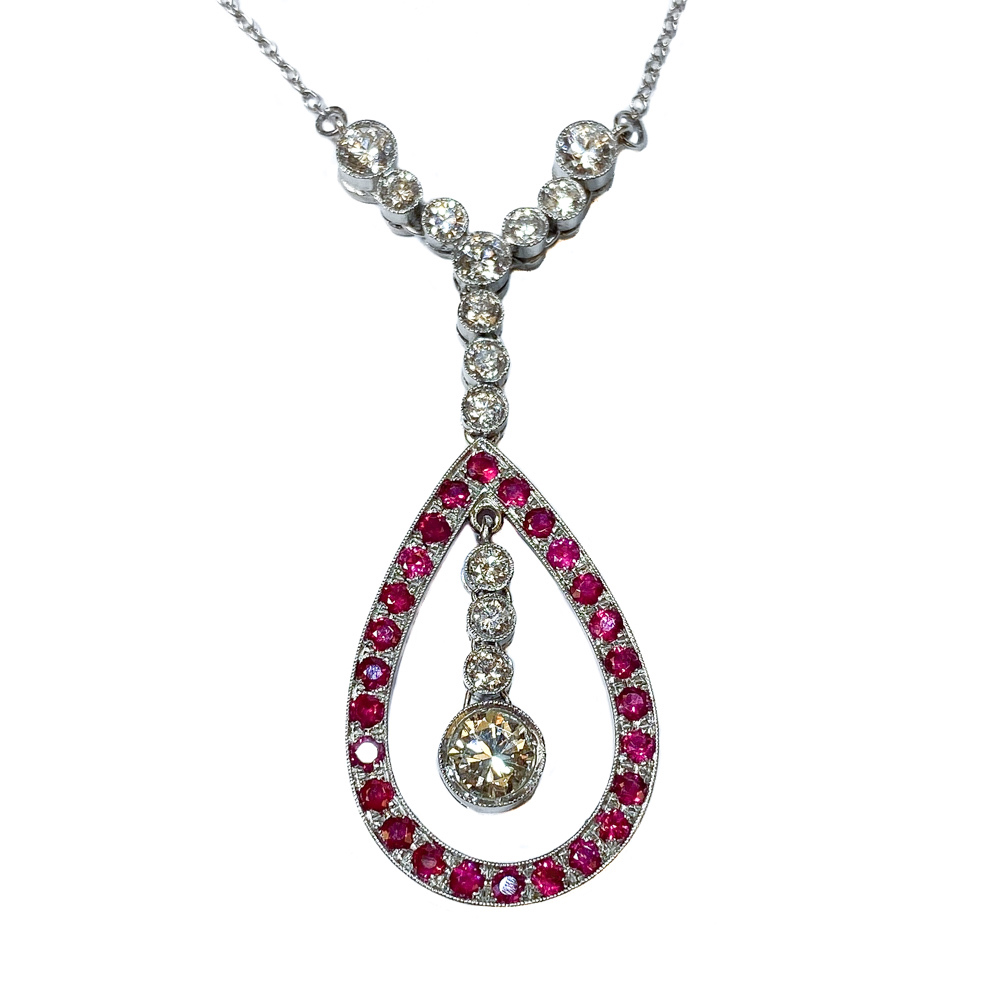
Necklace with rubies and diamonds
Italy, 1910s
A CLOSER LOOK
 
Corundum is composed of aluminum oxide (Al₂O₃). Under specific conditions of heat and pressure, it crystallizes into compact, orderly structures that give rise to hard, brilliant, and chemically stable crystals.
 
One of its most remarkable traits is its hardness: corundum ranks 9 on the Mohs scale, the system that measures the resistance of minerals to scratches and abrasions, second only to diamond, which gets a 10. This makes it especially well-suited for jewelry: corundum gems are not only visually stunning, but also durable enough for everyday wear.
Aesthetically, what stands out most is the wide range of colors corundum can exhibit. Unlike many minerals that have only one color, corundum is allochromatic—meaning that, while it is colorless in its pure form, it can assume various colors due to the presence of trace elements in its crystal structure. These elements can dramatically alter the crystal’s appearance: for example, the presence of chromium gives rise to the red variety known as ruby, while iron and titanium are responsible for the blue of sapphire.
 
But many more colors are possible: from soft pink to violet, orange, green, gray, and vivid yellow. All these colors, except ruby red, fall under the general term “sapphire,” often followed by the specific color name.
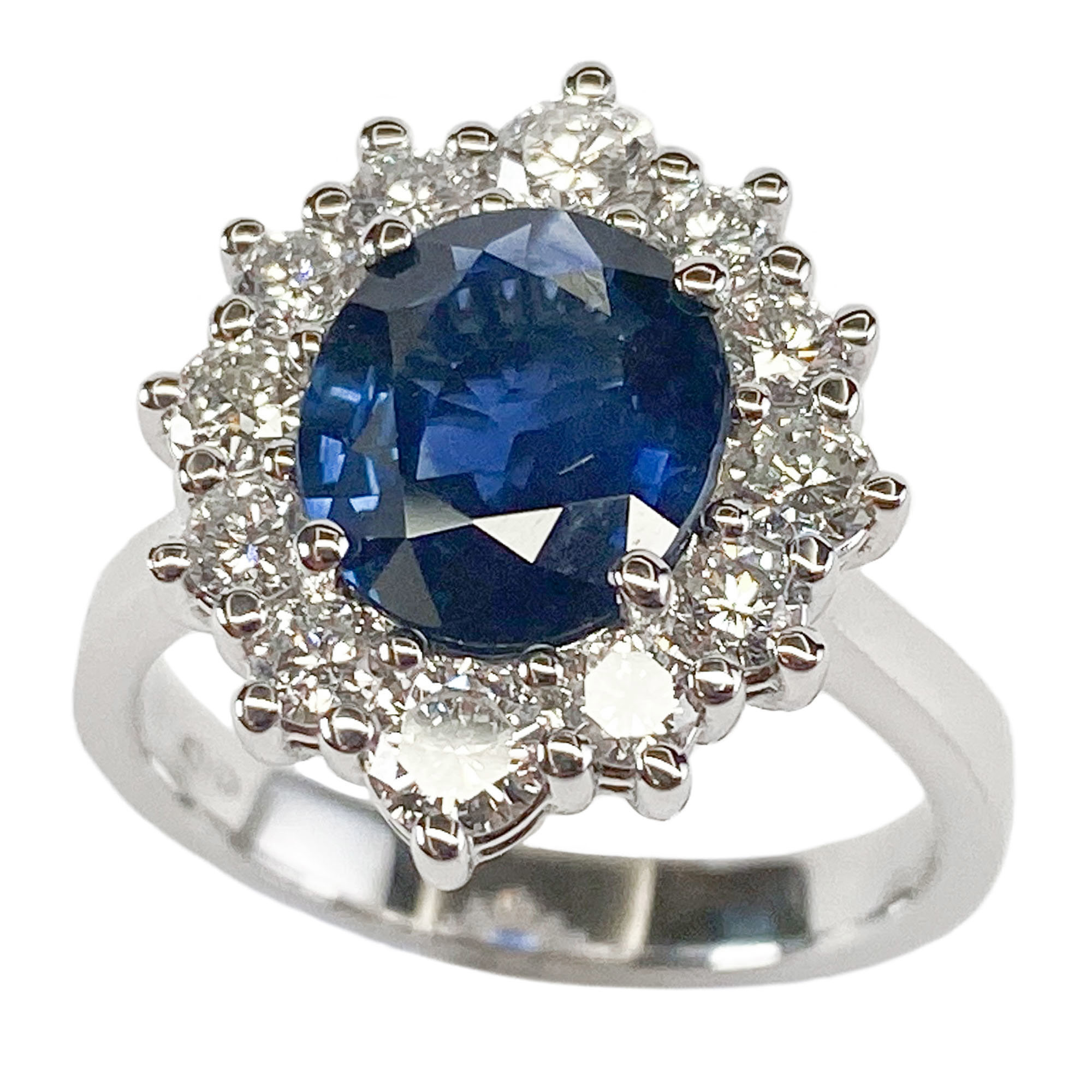
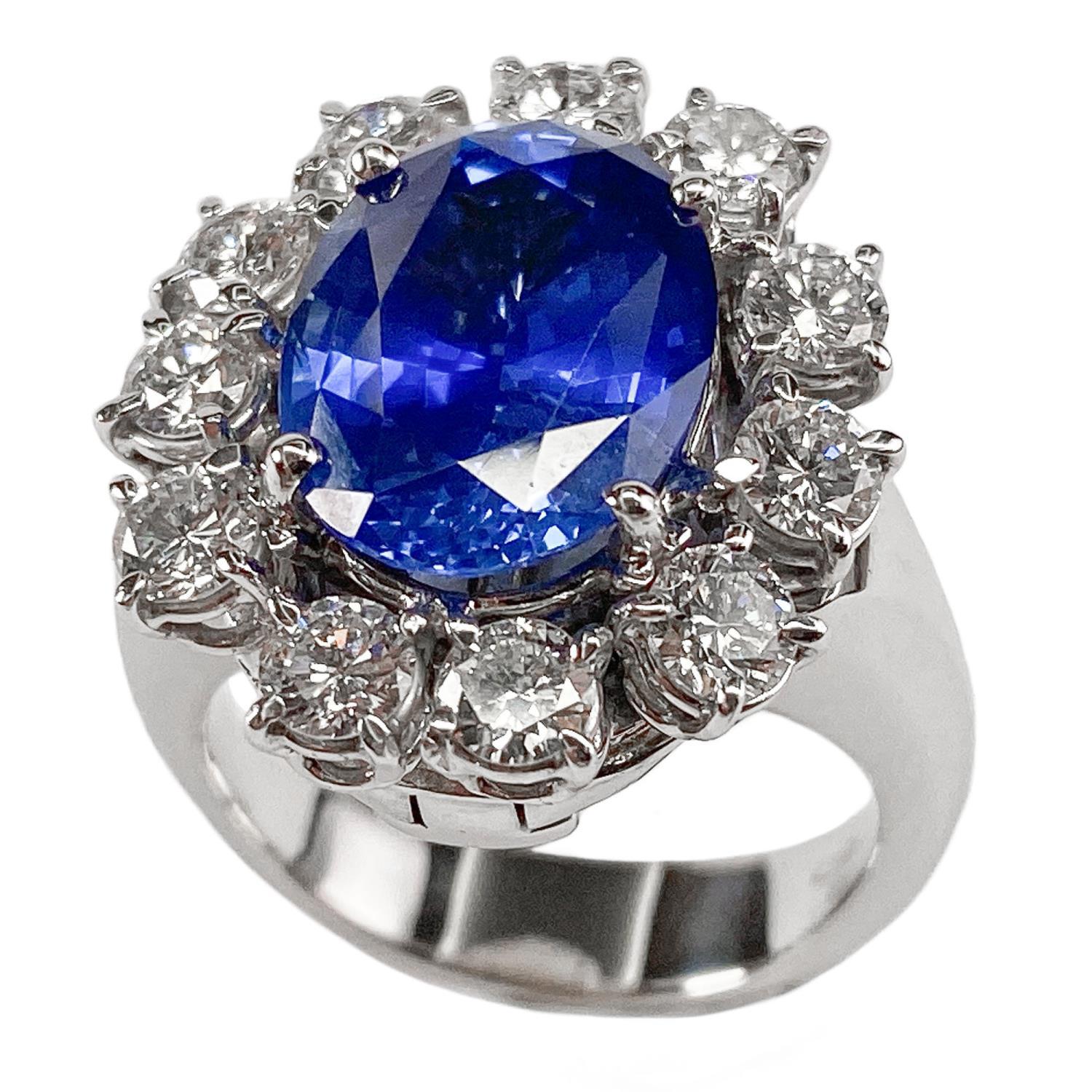
Ring with sapphire and diamonds
Italy, 1960s
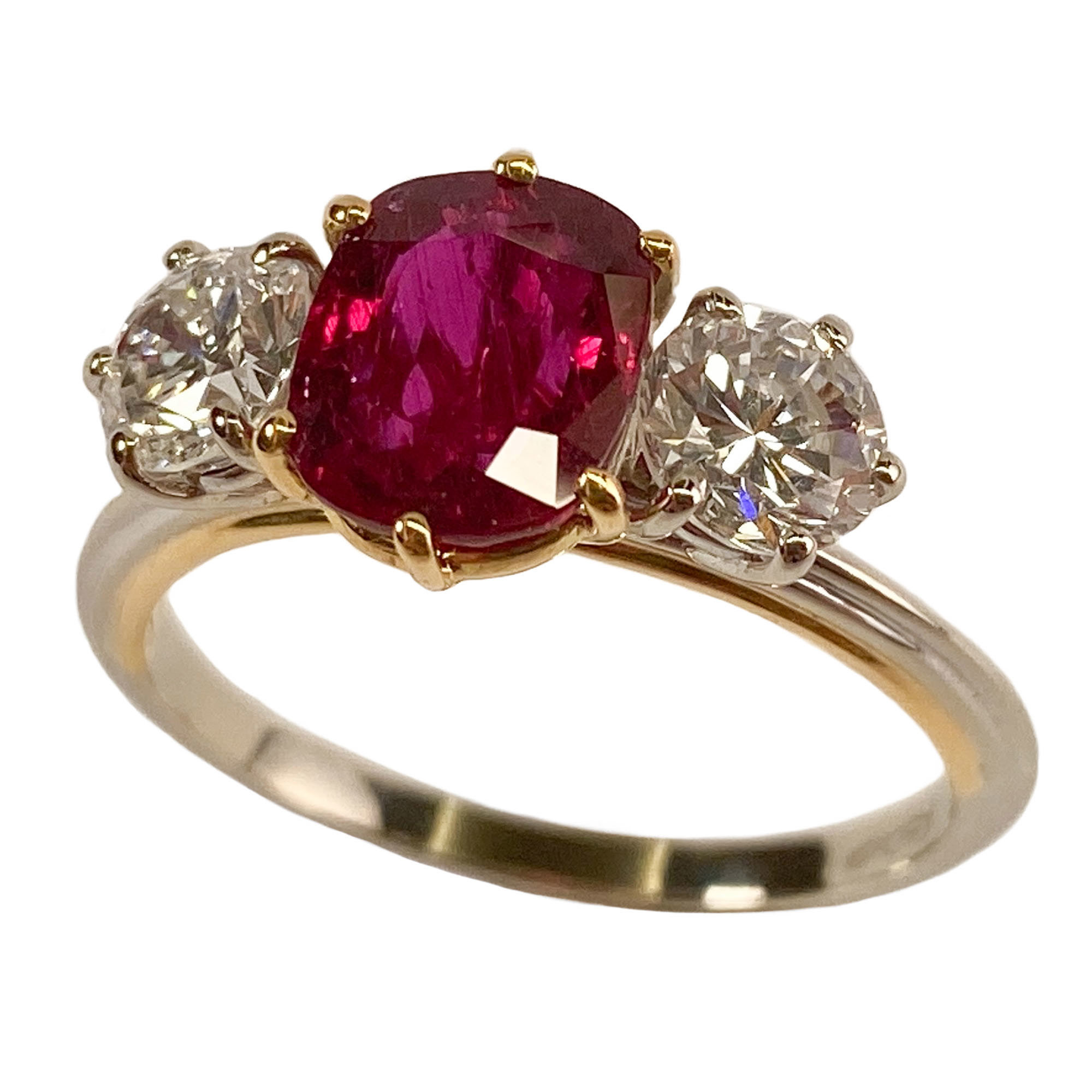
Ring with ruby and diamonds
Italy, 1980s
THE KING OF GEMS
 
Of all corundum varieties, ruby is the most highly valued. Its rich red color, long associated with vitality, passion, and power, has earned it an high status, in facts it has been desired by both Eastern courts and great European dynasties.
 
As mentioned, its red hue is caused by traces of chromium within the crystal structure of aluminum oxide. The depth and quality of this red can vary significantly, depending on the amount and distribution of chromium. Rubies with the highest color saturation are often described with evocative terms such as “pigeon’s blood,” a traditional, but non-scientific, name referring to a pure, slightly bluish red, considered the most desirable.
Among the most famous ruby sources is Mogok, in Myanmar (formerly Burma), whose mines have been active since at least the 6th century CE and have produced some of the finest rubies known to date. In more recent years, Montepuez in Mozambique has become one of the most important sources, yielding rubies of remarkable and saturation. Other significant ruby-producing countries include Vietnam, Tanzania, Sri Lanka, Thailand, Afghanistan, and Pakistan.
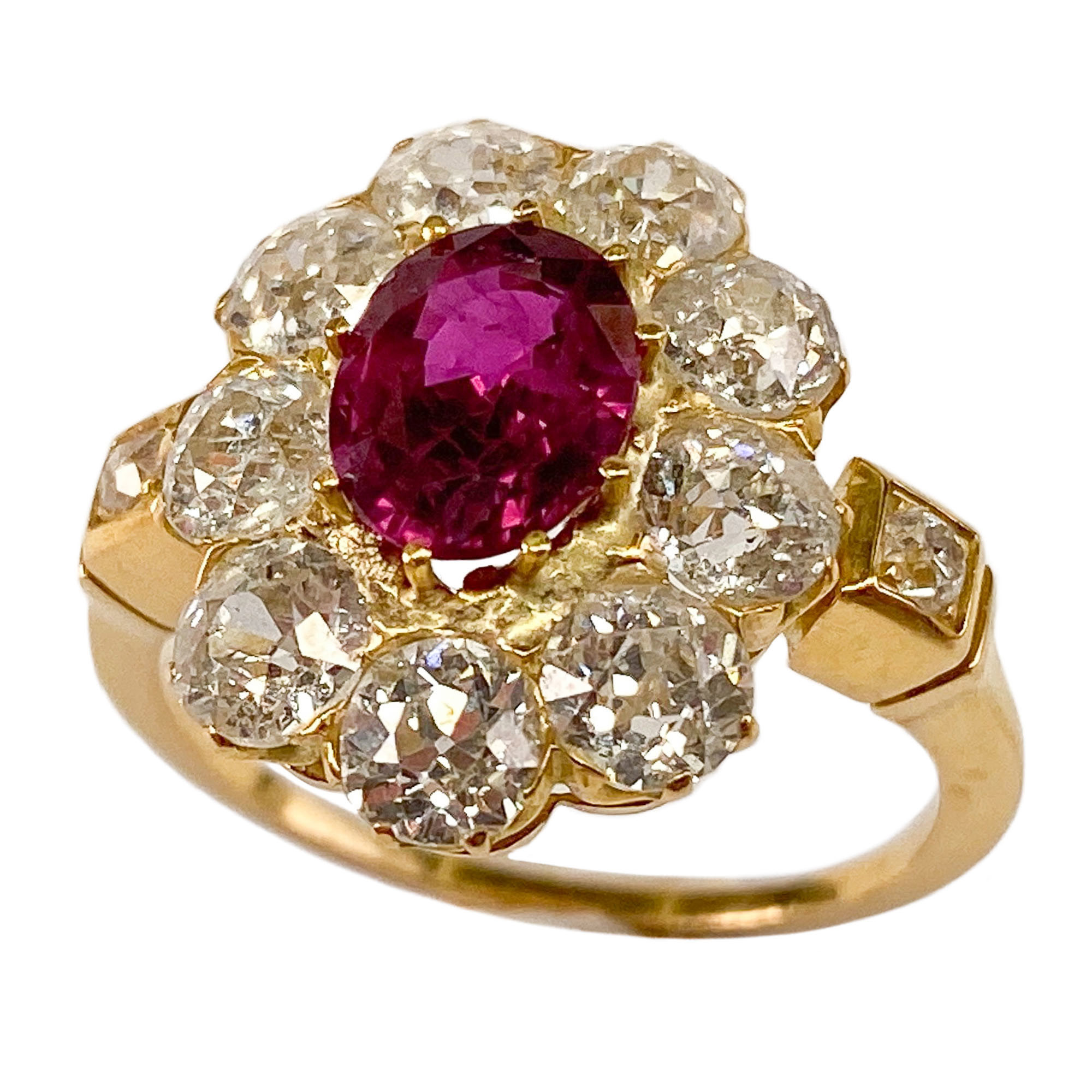
Ring with ruby and diamonds
Italy, 1920s
 
 
Under magnification, rubies typically display inclusions, which are some internal features that, when not overly disruptive to color or transparency, can produce attractive optical effects. In gemology, these inclusions are not necessarily viewed as flaws. On the contrary, they can help distinguish natural rubies from synthetic or treated ones and are often used as identifying characteristics.
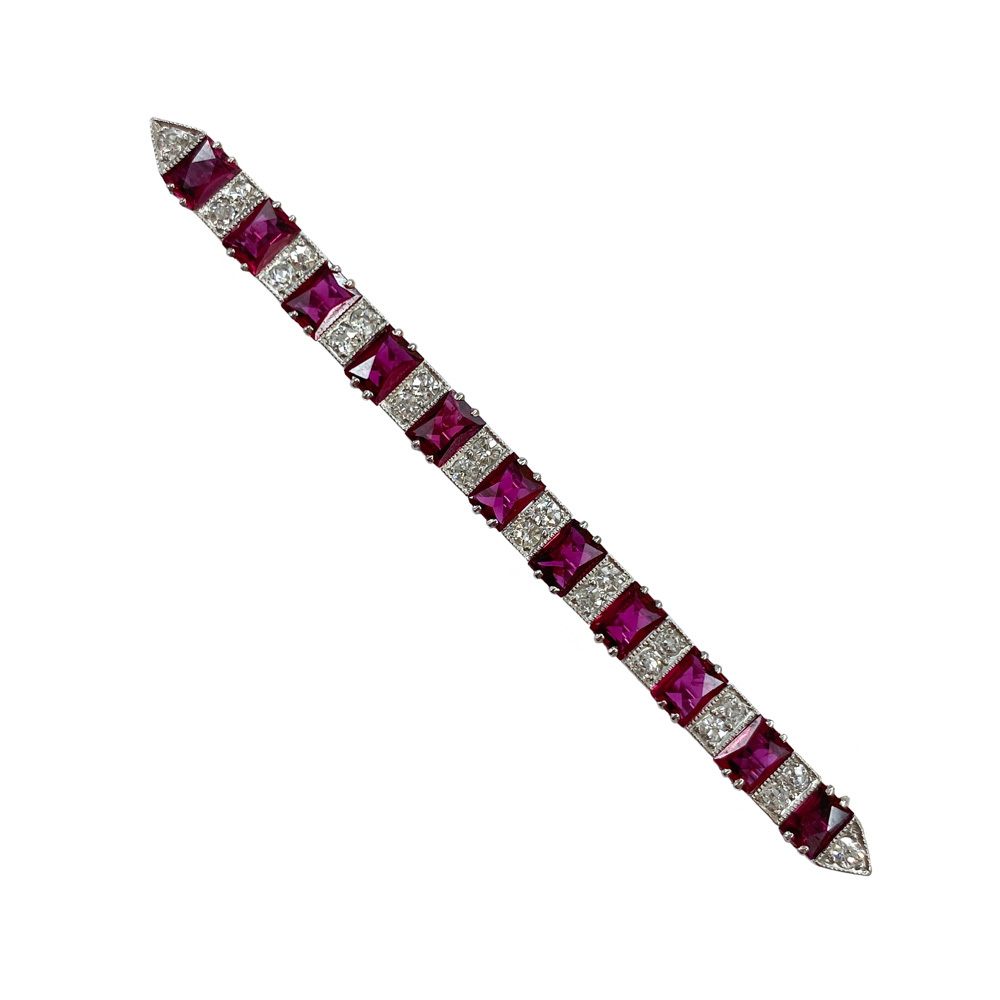
Brooch with rubies and diamonds
Italy, early 1900s
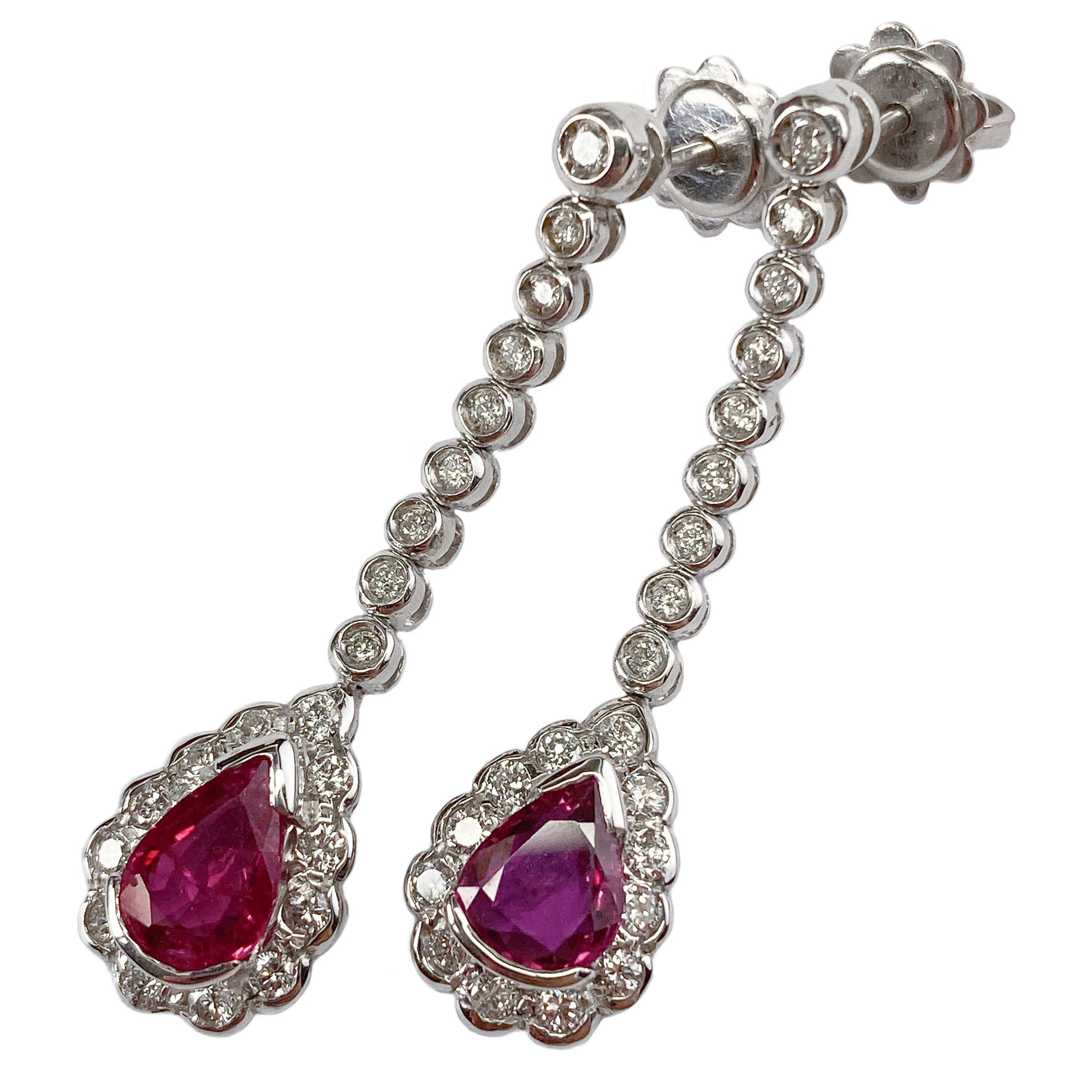
Earrings with rbies and diamonds
Italyt, 1970s
Jewel with sapphire and diamonds
Italy, 1960s
BLUE AS THE SKY


Sapphire is one of the most beloved gemstones in fine jewelry, prized not only for its beauty but also for the meanings it conveys. Its iconic blue color is the result of iron and titanium atoms substituting into the crystal structure. Depending on the specific trace element concentrations, sapphires can range from light lavender-blue to rich, velvety navy. The most sought-after sapphires display a vivid, intense blue that is neither too dark nor too pale, just enough to allow the gem’s inner brilliance to shine.
 
Like rubies, sapphires form in metamorphic environments and are typically found in primary rock deposits or secondary alluvial formations built up over millions of years. Though sapphire deposits are spread across the globe, one of the most legendary is Kashmir, known for producing sapphires of incomparable beauty—many of which are now historical, as the mines are largely depleted. Other major sources include Sri Lanka, Myanmar, Thailand, Australia, and Madagascar.
Sapphires have long been associated with wisdom, loyalty, and divine favor. In ancient Greece, they were believed to protect against envy and harm. During the Middle Ages, blue sapphires were linked to piety and were often worn by clergy during the religious ceremony.
 
European royalty, too, embraced the sapphire as a symbol of virtue and authority, most famously embodied in the sapphire engagement ring once worn by Princess Diana and now by the Princess of Wales, one of the most iconic jewels of our time.
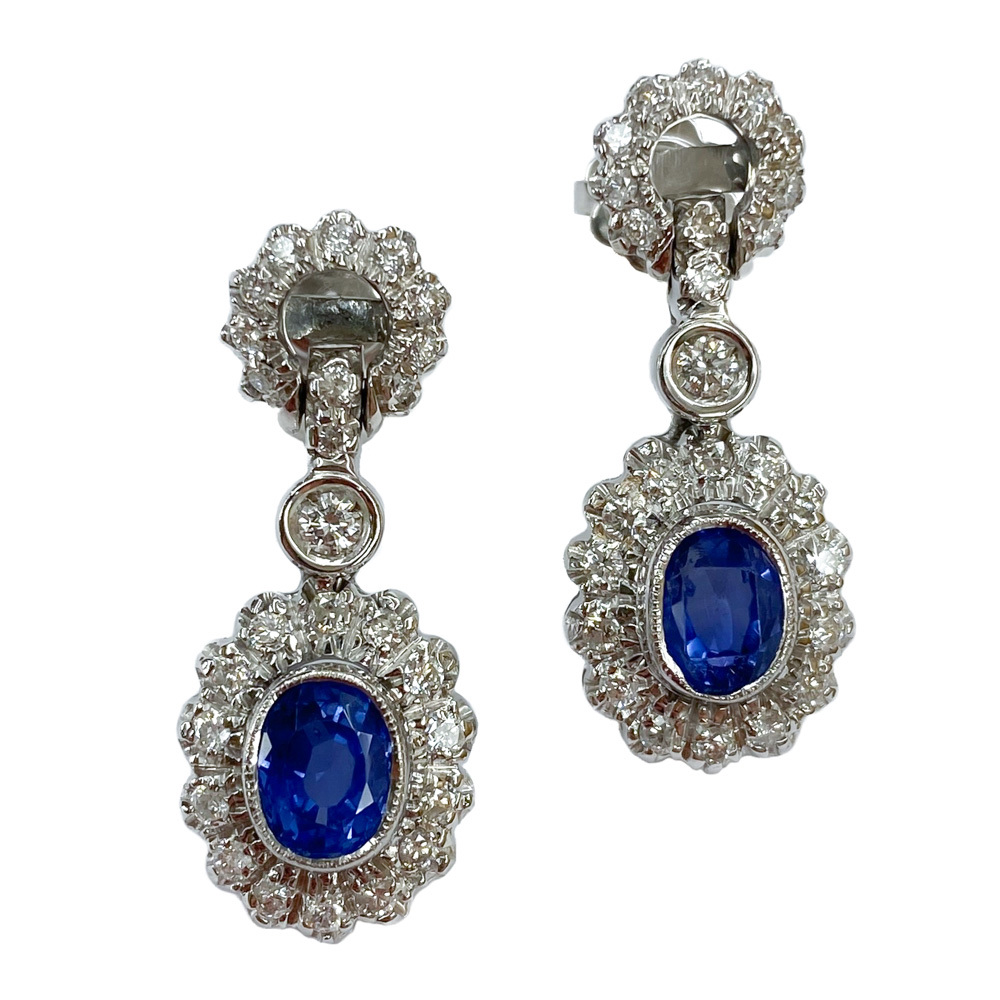
Earrings with sapphires and diamonds
Italy, 1950s
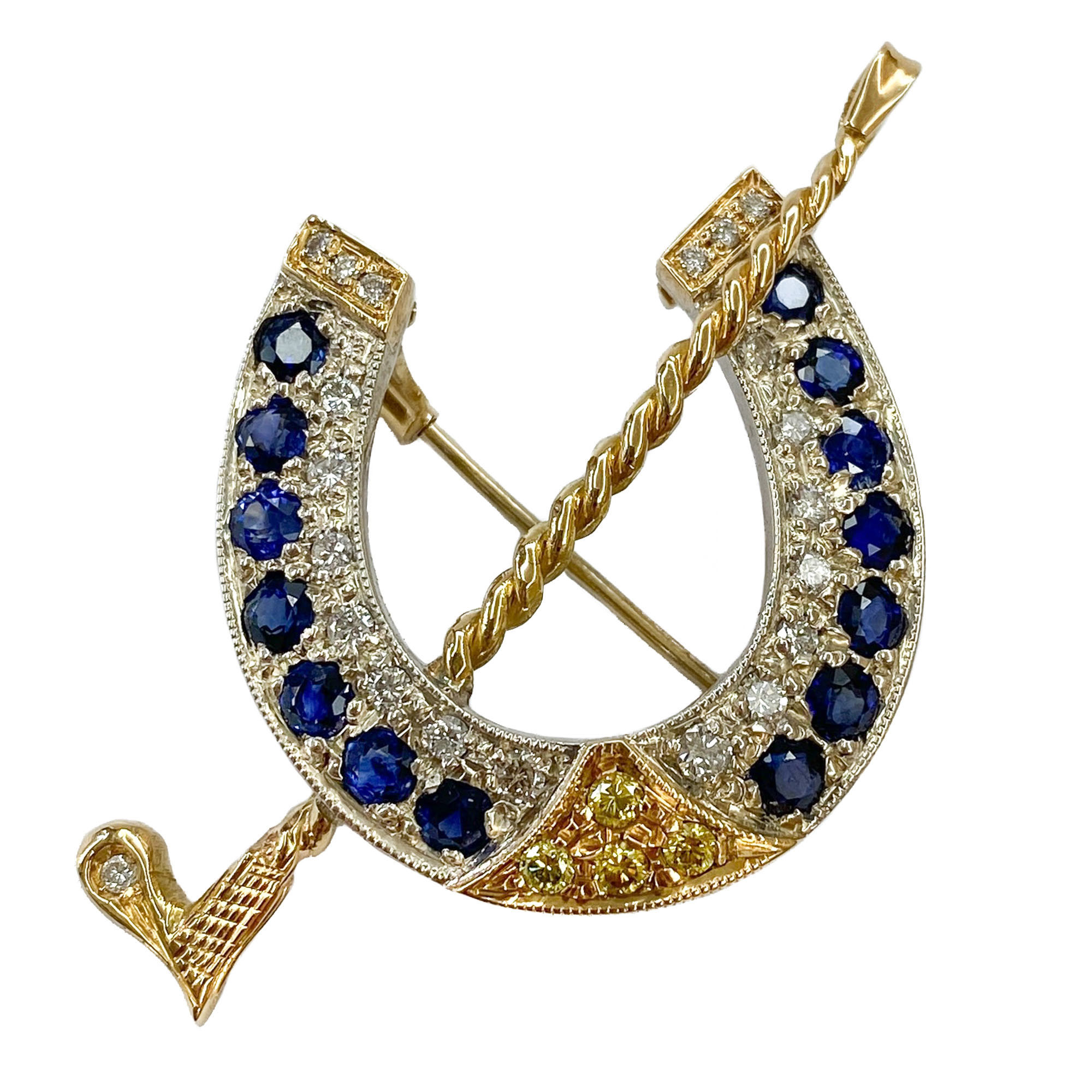
Brooch with sapphires and diamonds
Italy, 1970s
With their iconic elegance and deep symbolism, sapphires continue to enchant collectors and remain a staple in both classic and contemporary jewelry.
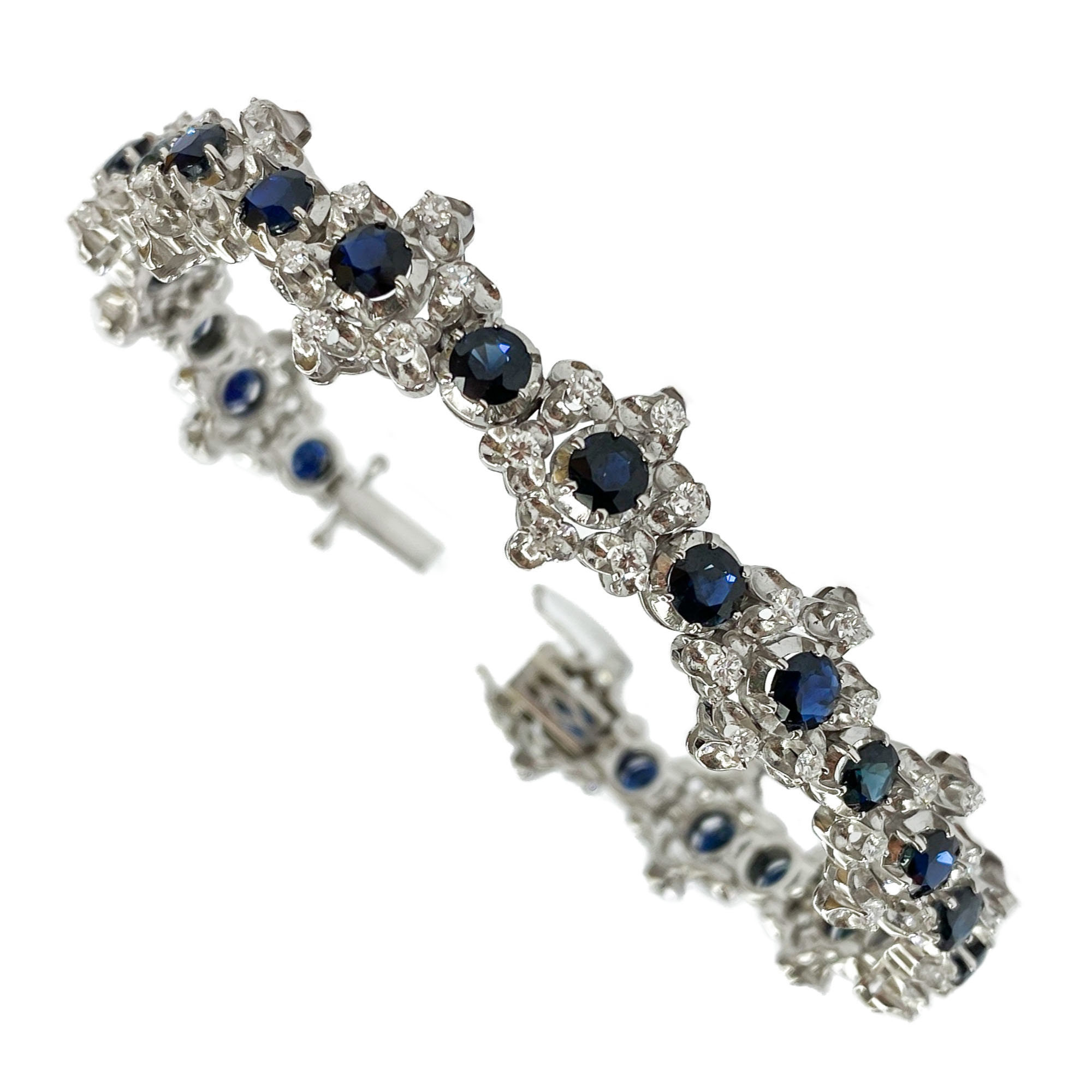
Bracelet with sapphires and diamonds
Italy, 1980s
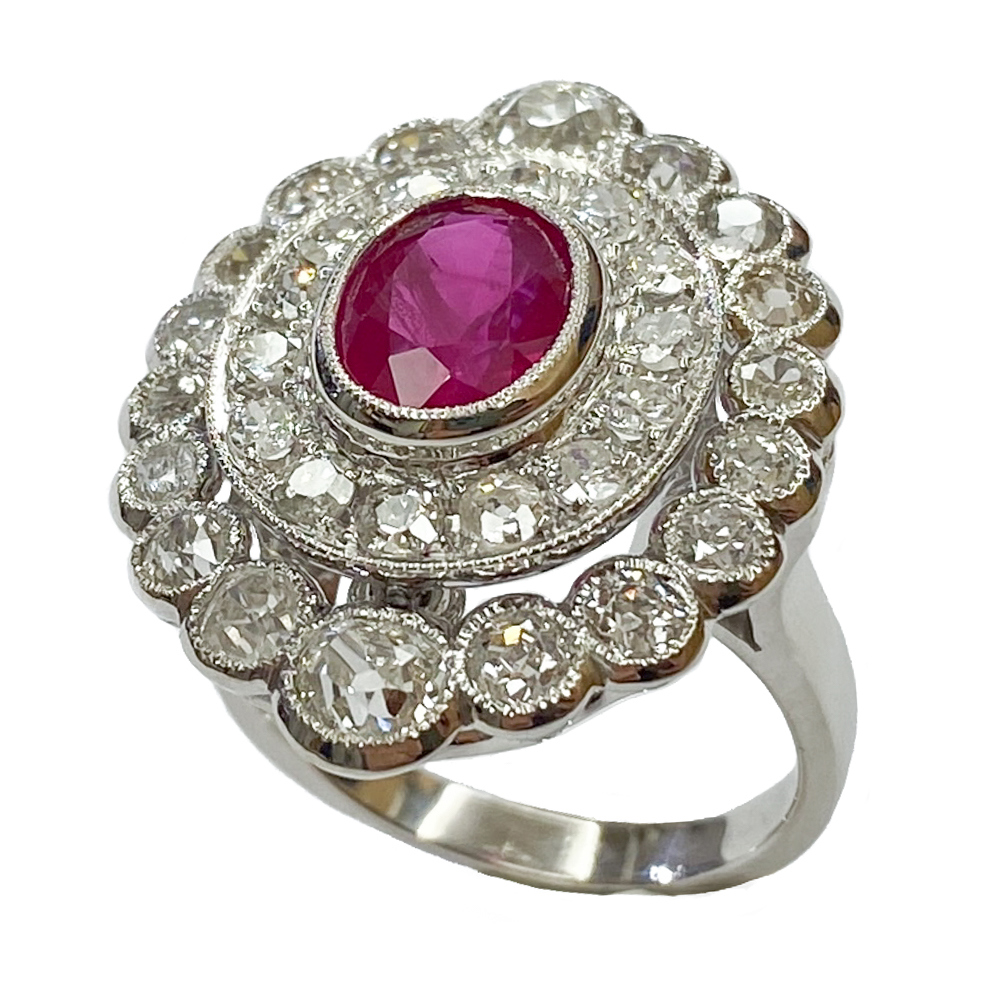
Ring with ruby and diamonds
Italy, 1980s
Rubies and sapphires, like all varieties of corundum, are complex gems that require expert knowledge to be identify, grade, and set properly. Their internal structure, color range, inclusions, and potential treatments demand careful study, often combining traditional observation with modern laboratory techniques.
 
At the same time, these gems offer various possibilities for use in jewelry thanks to their durability, brilliance, and wide range of colors. Knowing how to use corundums with awareness means enhancing not only their physical and optical properties but also the meaning they can convey when set into the right piece of jewelry.

Watch the video to be amazed by our sapphires and rubies.

Become a Passionario

Chat with us