it / en
it / en

Cameos: narrators of ancient times

A meticulous and refined technique
Meticulous and refined, the cameo technique is rightfully among the most treasured forms of glyptics, the art of carving gems, as it consists of creating a relief carving on multi-layered materials, such as colored and opaque gemstones or shells. These media enable to maintain a good color contrast between the different levels of the work. The word
cameo is originally derived from the Arabic word gama'il, meaning flower bud. From this came the ancient French designation camaheu, which later gave rise to the current term.
 
Since they mainly depict social and historical events, mythological and religious figures, and the favored motifs of various historical periods, these pieces of jewelry serve as privileged narrators of past eras capturing the styles, philosophies, beliefs and values of their time. Cameos cannot be regarded as mere decorations, but are artifacts that carry with them stories of civilizations, artisanship, and symbolism. This is the reason behind their appeal, which manages to cross centuries, fashions, and cultures, standing the test of time.
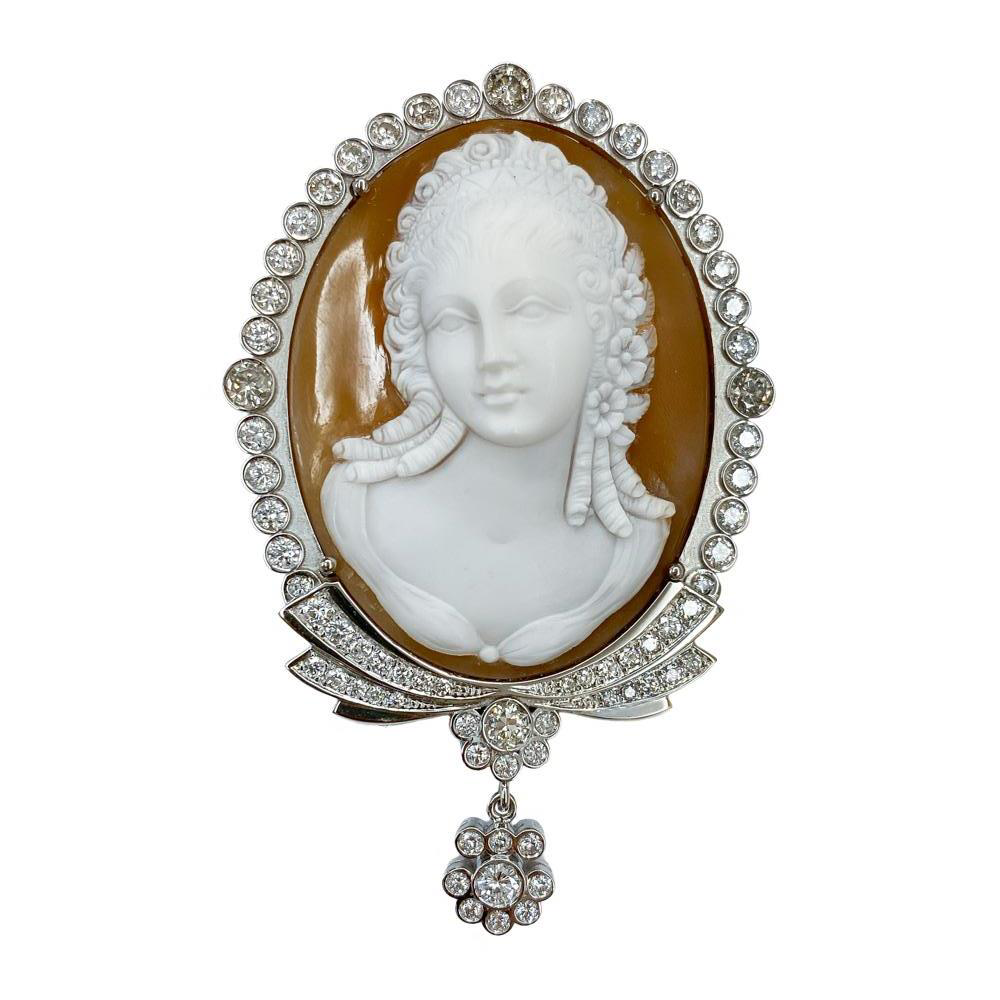
18 karat white gold brooch - pendant
Italy, 1950s
The history of all the great civilizations of the past is linked to the evolution of cameos, which have very ancient origins. Just consider that petroglyphs, rock carvings, and seals, crafted by the Egyptians thousands of years before Christ, are considered the ancestors of this technique. It was in the Phoenician and Etruscan periods that actual gemstones - primarily agate and onyx - began to be used for ornaments depicting natural elements, faces, or epic figures. In the Hellenistic period, the Greeks continued to further refine this craftsmanship, resulting in mythological scenes and portraits of extraordinary finesse.
 
It was the Romans, however, who gave cameos unparalleled importance, which, from this time on, became part of the favorite jewelry of the wealthier classes, who wore them set in rings and fibulae, but also on helmets and shields as a symbol of power. Emperor Octavian Augustus made them an emblem of prestige, ordering the production of splendid pieces depicting his image and accomplishments, some of which are still preserved in the world’s most important museums.
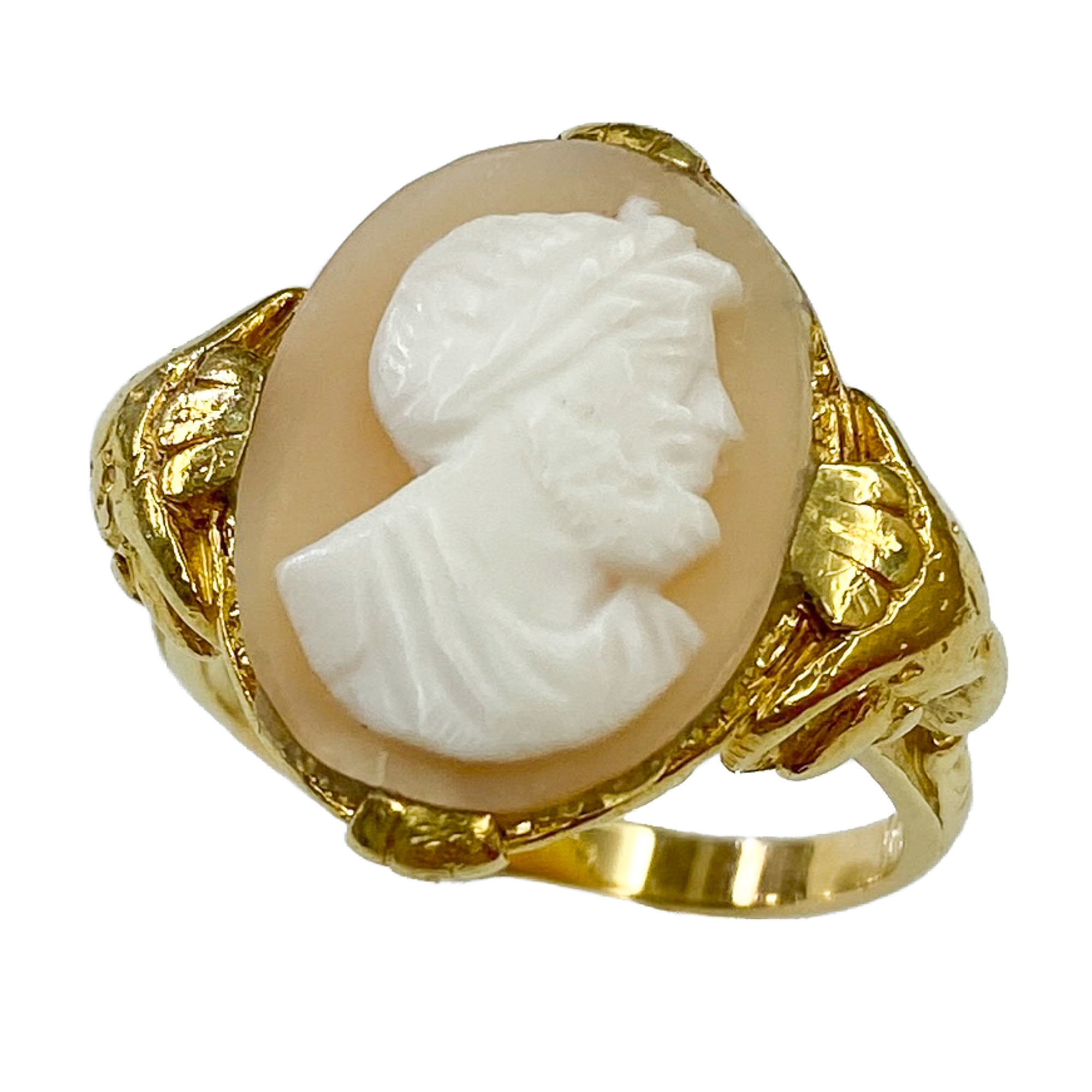
18-karat yellow gold ring
Switzerland, 1960s
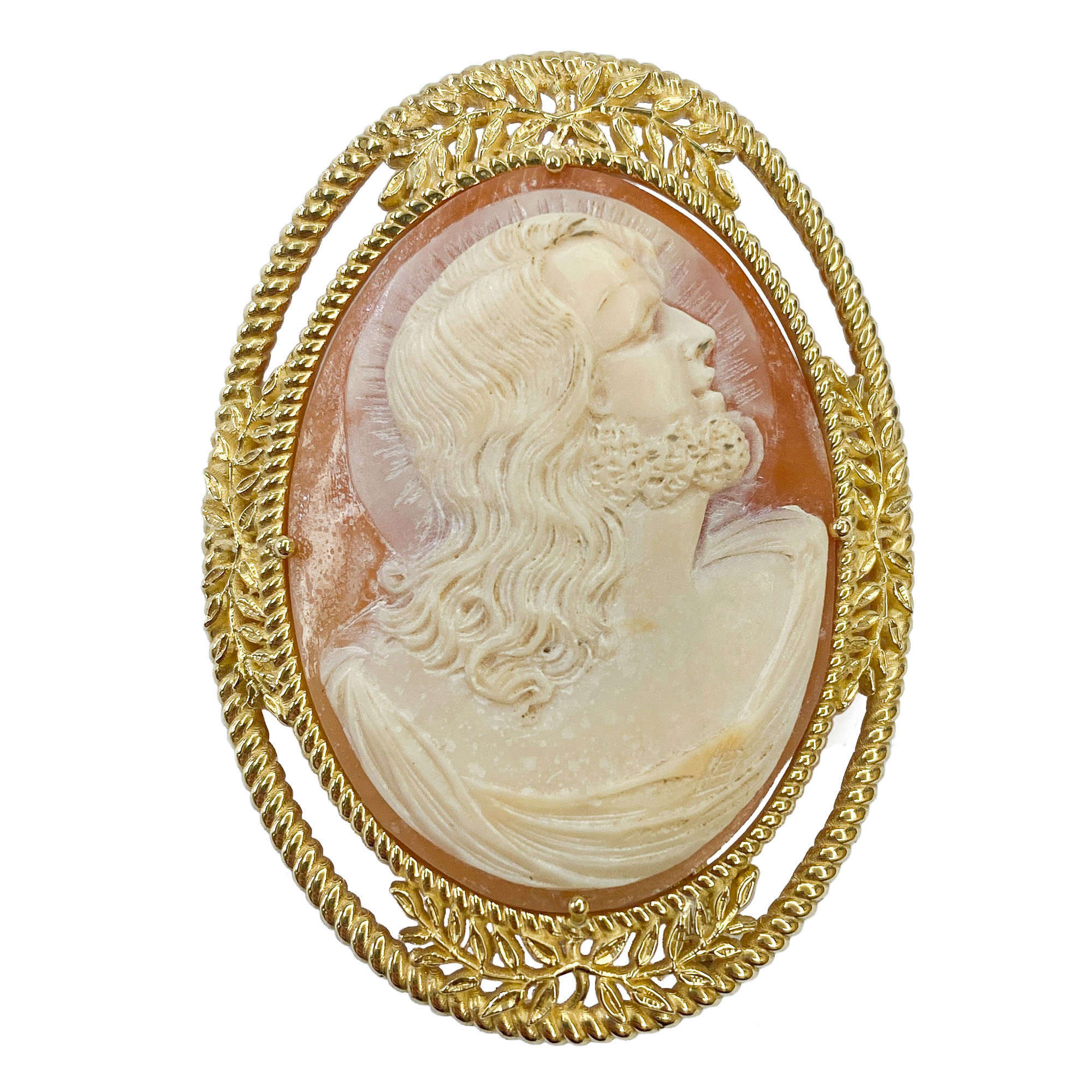
18-karat yellow gold brooch
Italy, 1960s
With the fall of the Roman Empire and the advent of the Middle Ages, cameo production suffered a downfall, partly due to the spread of the Christianity, which restricted their use to the decoration of certain liturgical objects. The interest in antiquity that spread during the Renaissance encouraged artists and goldsmiths to rediscover this sophisticated art, which once again came to be appreciated by nobles and sovereigns, foremost by Lorenzo de’ Medici.
 
He and his family were great collectors of these artifacts, thus it was in Florence that the technical skills of cameo making were firstly rediscovered. At this time these artifacts depicted mainly scenes from ancient myths and legends.
In the 18th and 19th centuries, with the advent of Neoclassicism, cameos reached new heights of popularity. In these centuries, production expanded greatly, succeeding in winning over not only the nobility but also the bourgeoisie.
One of the reasons for the great popularity that cameos experienced from the 1700s onward was the rise of a new material that was cheaper and more accessible: shells. If until then the so-called “semi- precious stones” had dominated, artisans now shifted almost entirely to shells, as they were smoother to carve and significantly lighter than
agate and onyx.
 
Thus artisans were able to make carvings faster, finer, and more detailed. Moreover, the jewelry could reach even large sizes without being uncomfortable to wear. Consequently, the cameos became an indispensable element of fashion in the second half of the 19th century and the Art Nouveau period.
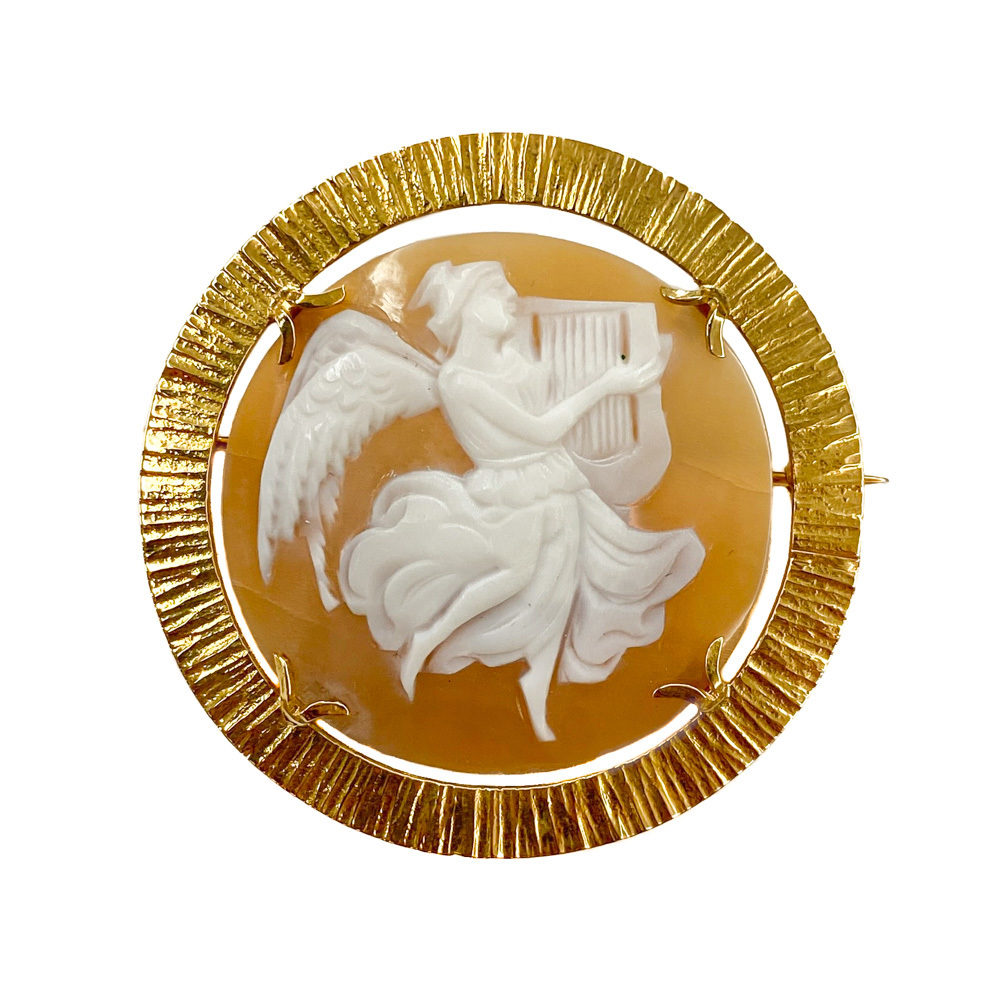
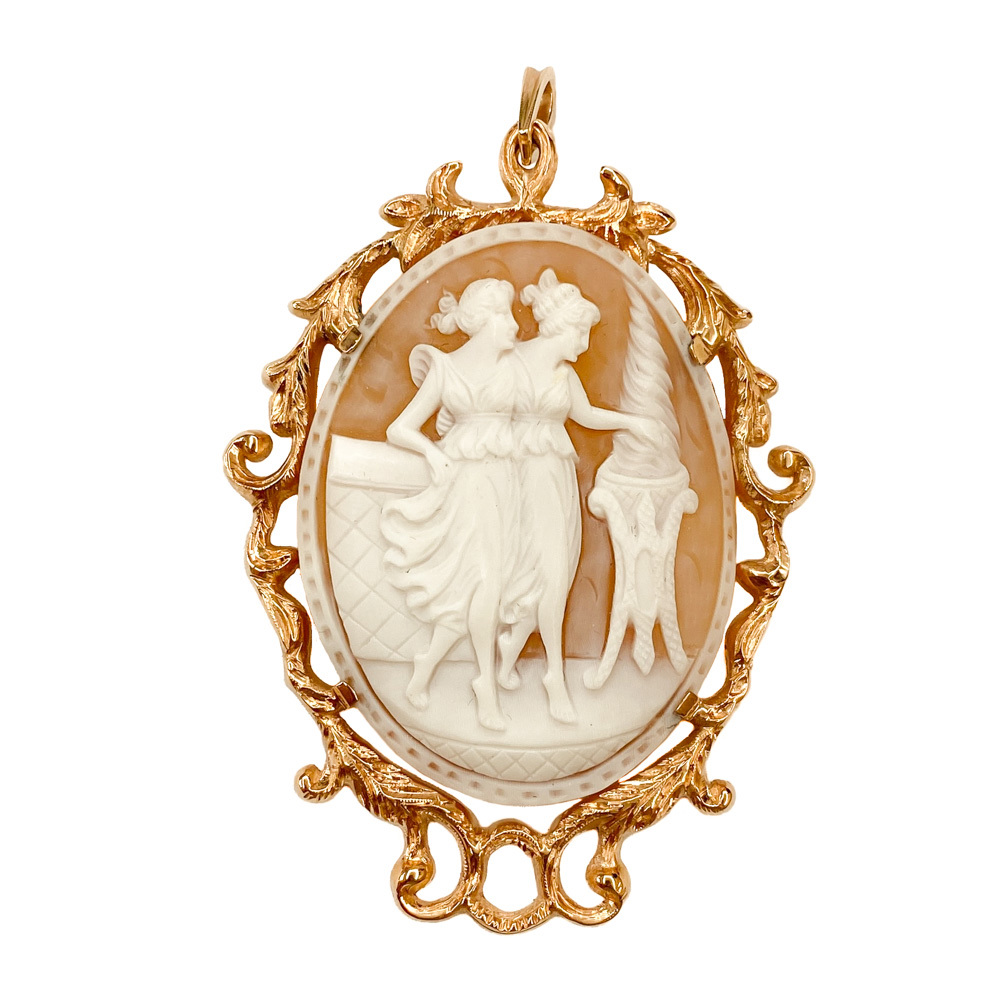
18-karat yellow gold brooch
Italy, 1950s
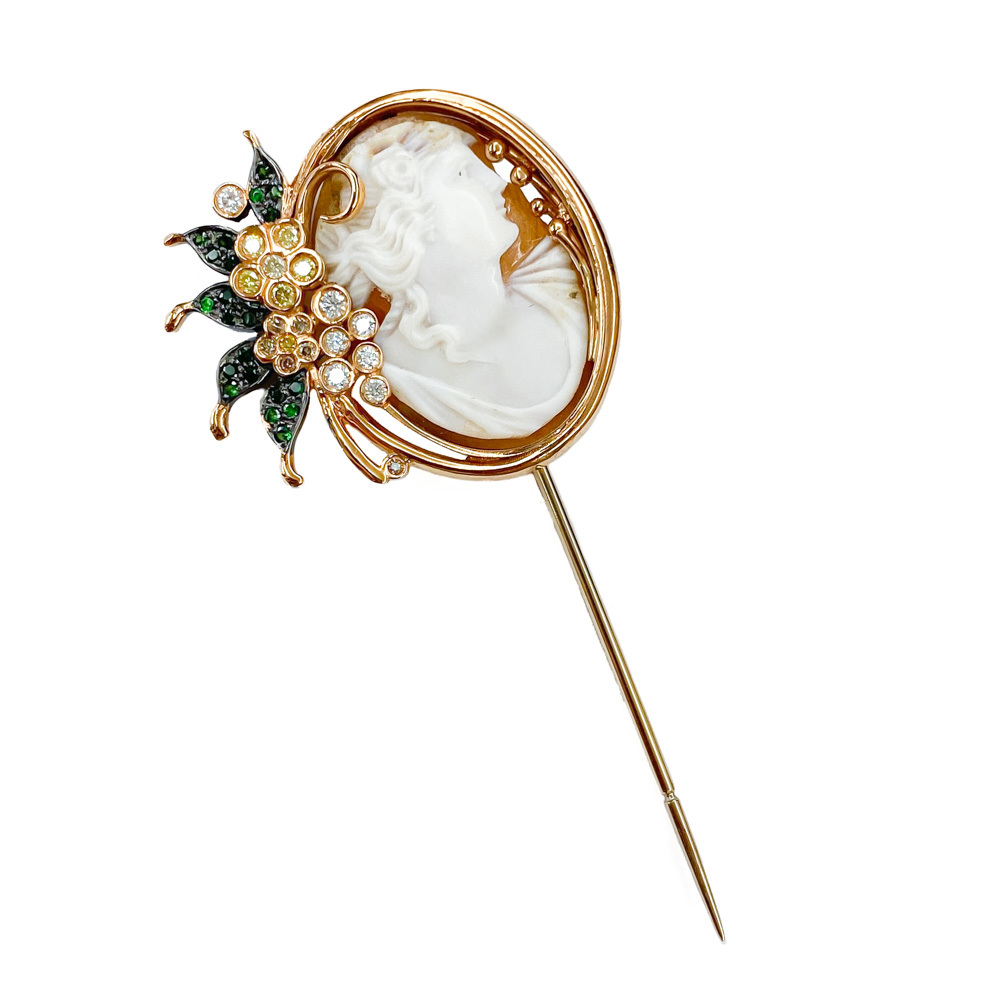
18-karat rose gold pin
Italy, 1960s
18-karat rose gold brooch
Italy, 1950s
The most popular shell for cameo production is Cassis madascarensis, the Sardonic shell, which is characterized by distinct layers of color, ranging from brown to white, providing an ideal contrast for engraving intricate details.
 
The undisputed capital of cameo production is Torre del Greco, a small town close to Naples, that has for centuries excelled as the hub of this particular artisanal tradition. Handed down from generation to generation in local workshops, this art is a meticulous process that requires care and attention at every step, starting with the choice of the shell best suited to the intended shape and color of the final piece
 
The first stage of cameo making is called scoppatura, where the most valuable part of the shell, the so-called cup, is isolated for engraving. This is followed by segnatura and cutting, where the edges of the intended design are outlined, allowing excess material to be removed immediately.
During aggarbatura, the edges of the shell are refined to shape the jewelry. Only later can the most crucial and delicate step begin. To succeed in creating valuable works, the master must be skilled both in the art of drawing and engraving.
 
By playing on the contrast between the bottom of the shell, which is dark and shiny, and its outermost layer, which is light and opaque, engravers must know how to fully exploit the material. This allows them to obtain three-dimensional relief figures with a sculptural depth and luminosity that make the cameo truly unique!
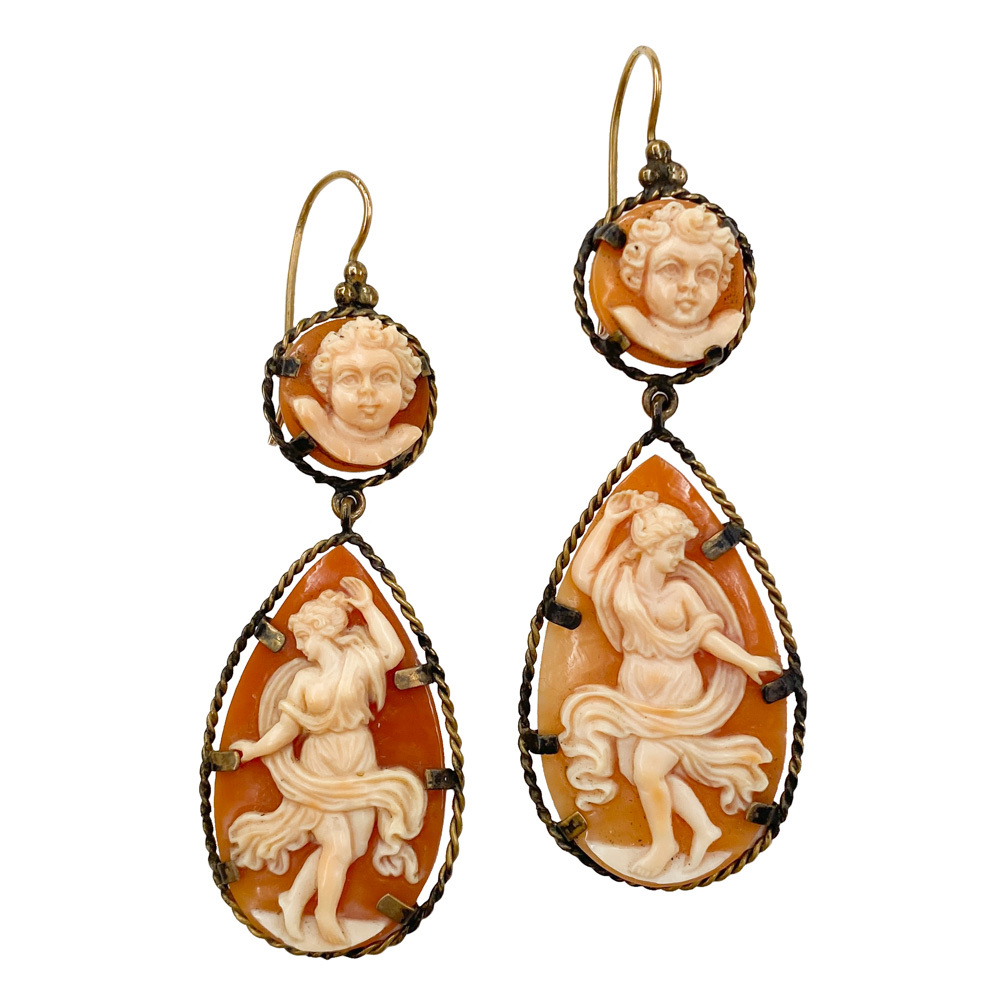
14-karat yellow gold earrings
Italy, early 1900s
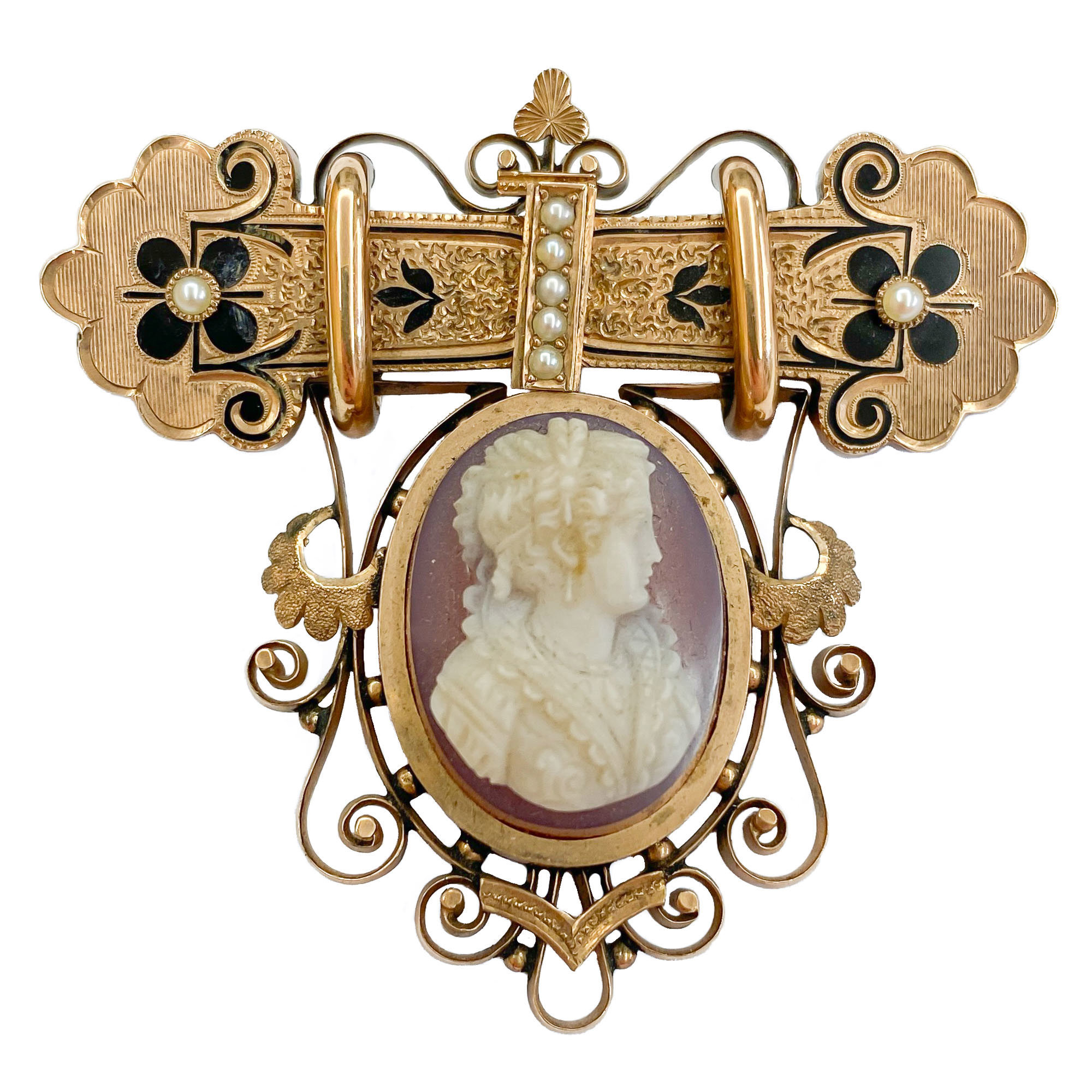
14-karat rose gold brooch
Austria, 19th century
Intermittently, cameos have been the focus of worldwide fashion, and over the centuries many historical figures have been passionate about these type of jewels. Napoleon Bonaparte, for example, was a great connoisseur of cameos and commissioned so many that his face is believed to be the most frequently depicted in this type of jewelry.
 
Queen Victoria also contributed to the spread of cameos popularity, which matched well with the romantic taste of the period and therefore became a distinctive element of the Victorian style. In the 20th century, many style icons, including Jacqueline Kennedy Onassis and Liz Taylor, revived the appeal of cameos, turning them into timeless accessories.
As of today, the public holds mixed opinions: some see cameos as vintage and outdated, while others remain captivated by their uniqueness. Recently, however, important designers and stylists have reintroduced this technique in their high jewelry collections, a sign that cameos continue to appeal!
 
A feature that should not be overlooked is the versatility of these pieces, which can be incorporated into brooches, pendants, rings, and earrings making them suitable for both sporty and romantic looks. To sum up, what truly matters is recognizing that each cameo is a miniature work of art, embodying the taste, sophistication, and savoir-faire of one of the most fascinating jewelry technique.
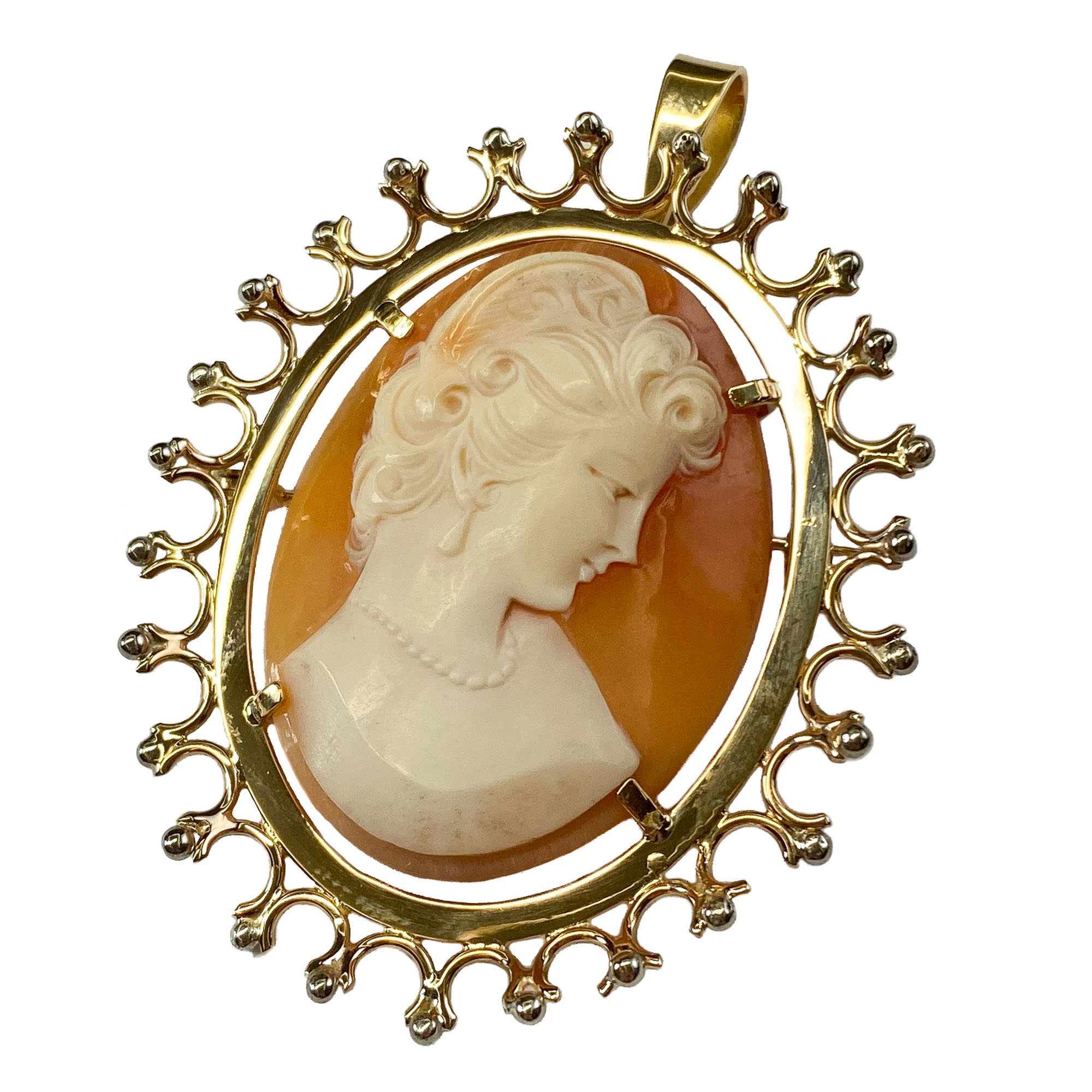
18-karat yellow gold brooch - pendant
Italy, 1970s 

Watch the video to see some of our items realized with this technique.

Become a Passionario

Chat with us