it / en
it / en

How to make a painting?

The main painting techniques and more
Over the centuries, the desire to represent the world through images has given rise to a multitude of pictorial techniques, each linked to specific historical periods, cultural contexts and material possibilities. Some have arisen in response to precise spiritual or decorative needs, others to satisfy the ever-increasing ambition to render reality more vividly and immediately. A painting is never only the result of the artist's inspiration, but also of the technique with which it was made.
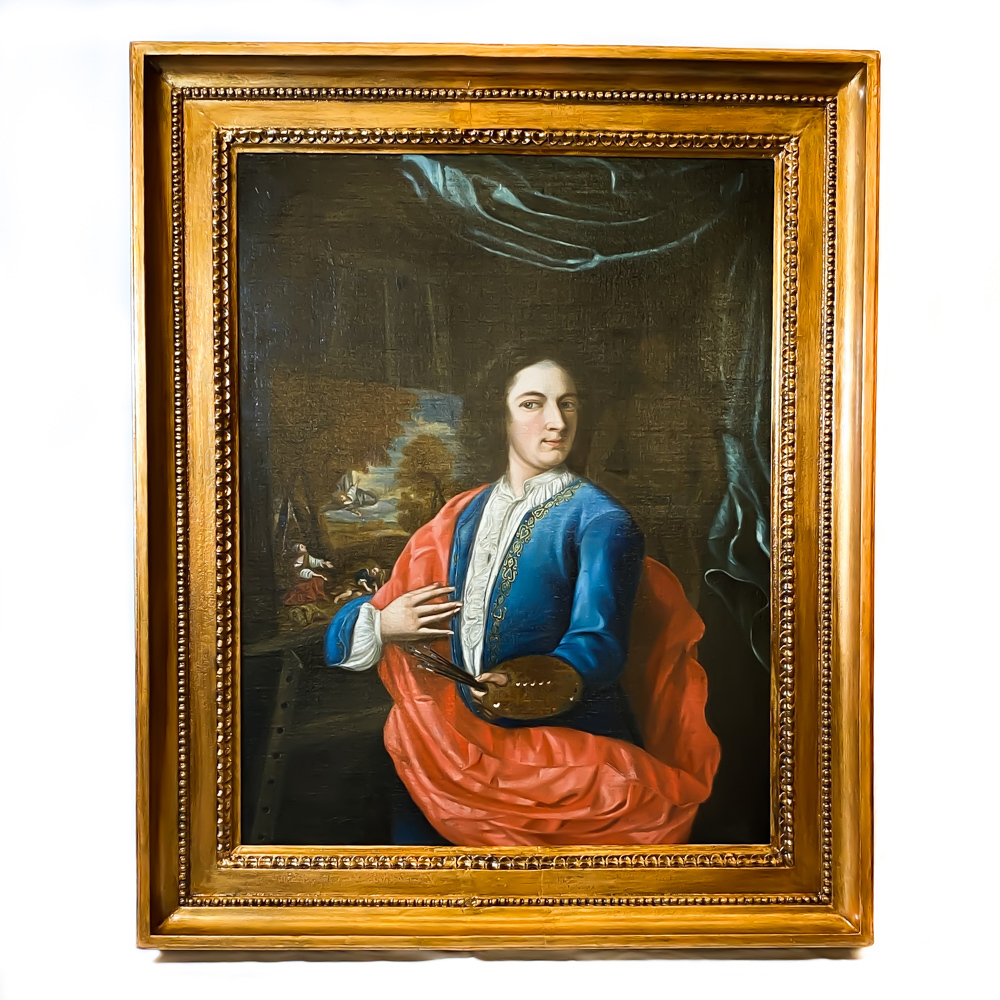
Self-portrait of a paianter
Italy, 18th century
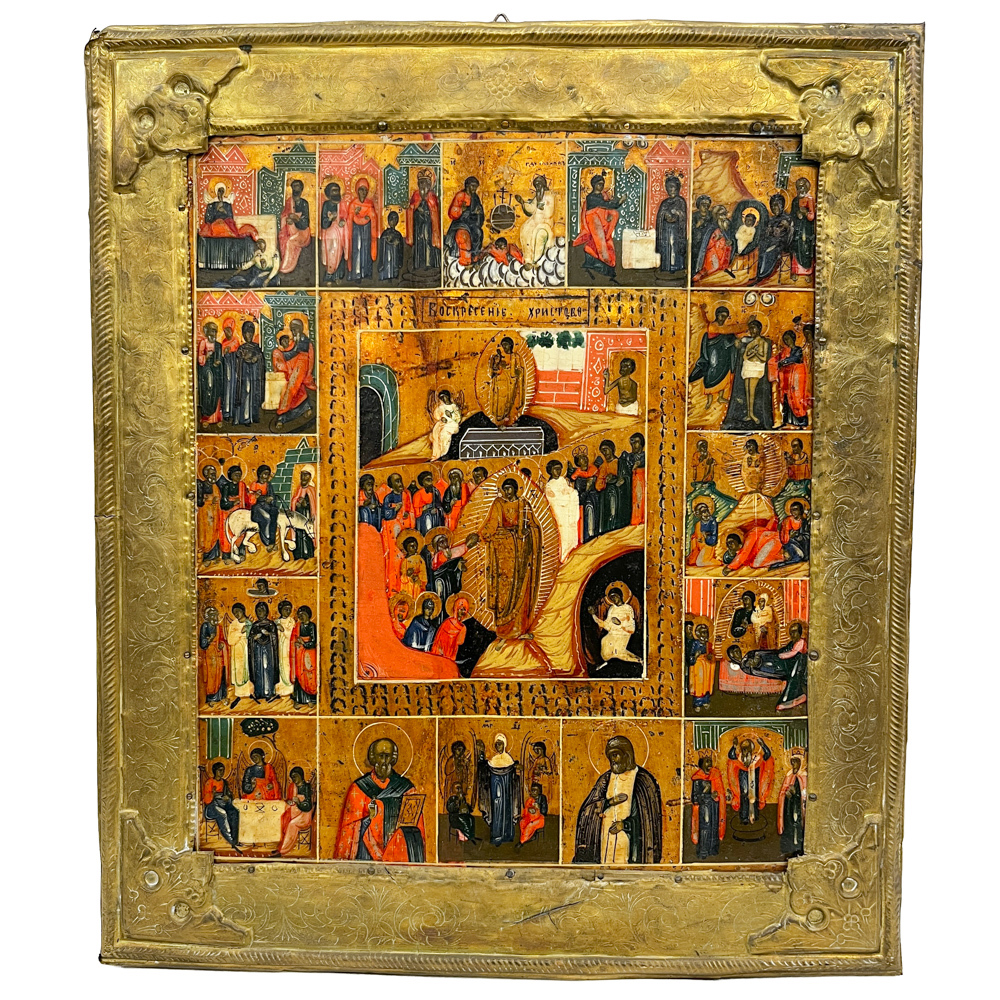
Icon of the Resurrection of Christ and the 16 festivites
Russia, 19th century
One of the oldest and most fascinating techniques is tempera on wood, widely used in the Middle Ages and still used and studied today for its extraordinary stability and brilliance. It consists of combining powdered pigments with a natural binder, the most common of which is egg yolk, that is capable of fixing the color and dries quickly. Wooden boards, often made of poplar or linden, are prepared with several layers of plaster mixed with animal glue, on which paint is applied in small strokes, without the possibility of major second thoughts.
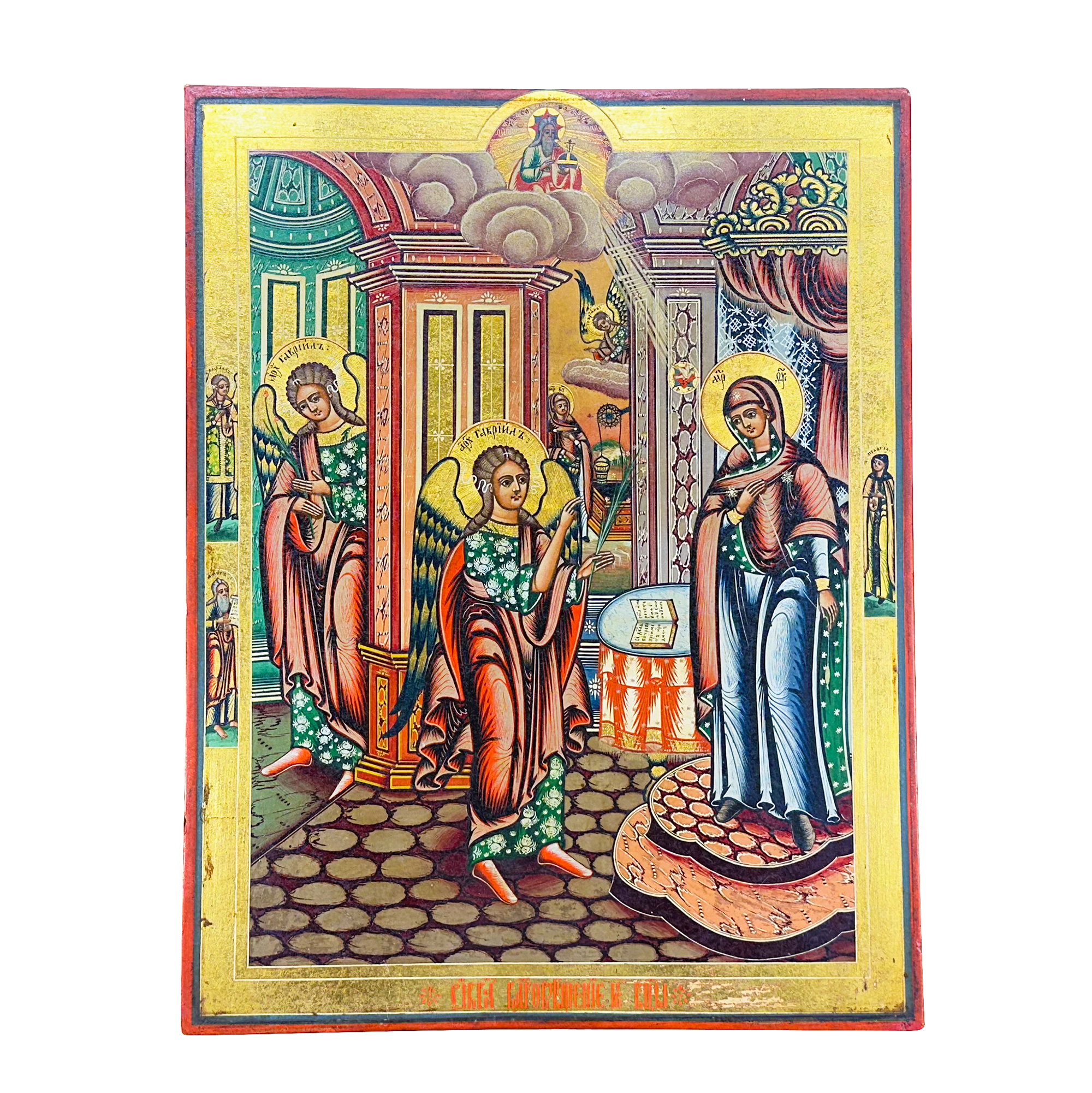
This technique requires a steady hand and rigorous planning, but it allows for smooth surfaces and pure, saturated colors that were very durable over time. Tempera was the favorite technique of Medieval sacred art, and it is still used today in Orthodox icons where the sacred image should not represent reality, but evoke the divine through idealized forms, symbolic colors and golden backgrounds. In this context, the work is not just decoration but an object of veneration, and this is the only technique that fully meets the requirements of precision, durability and sacredness.
Icon of the Annunciation
Russia, 19th century
Oil on canvas
Veneto 18th century
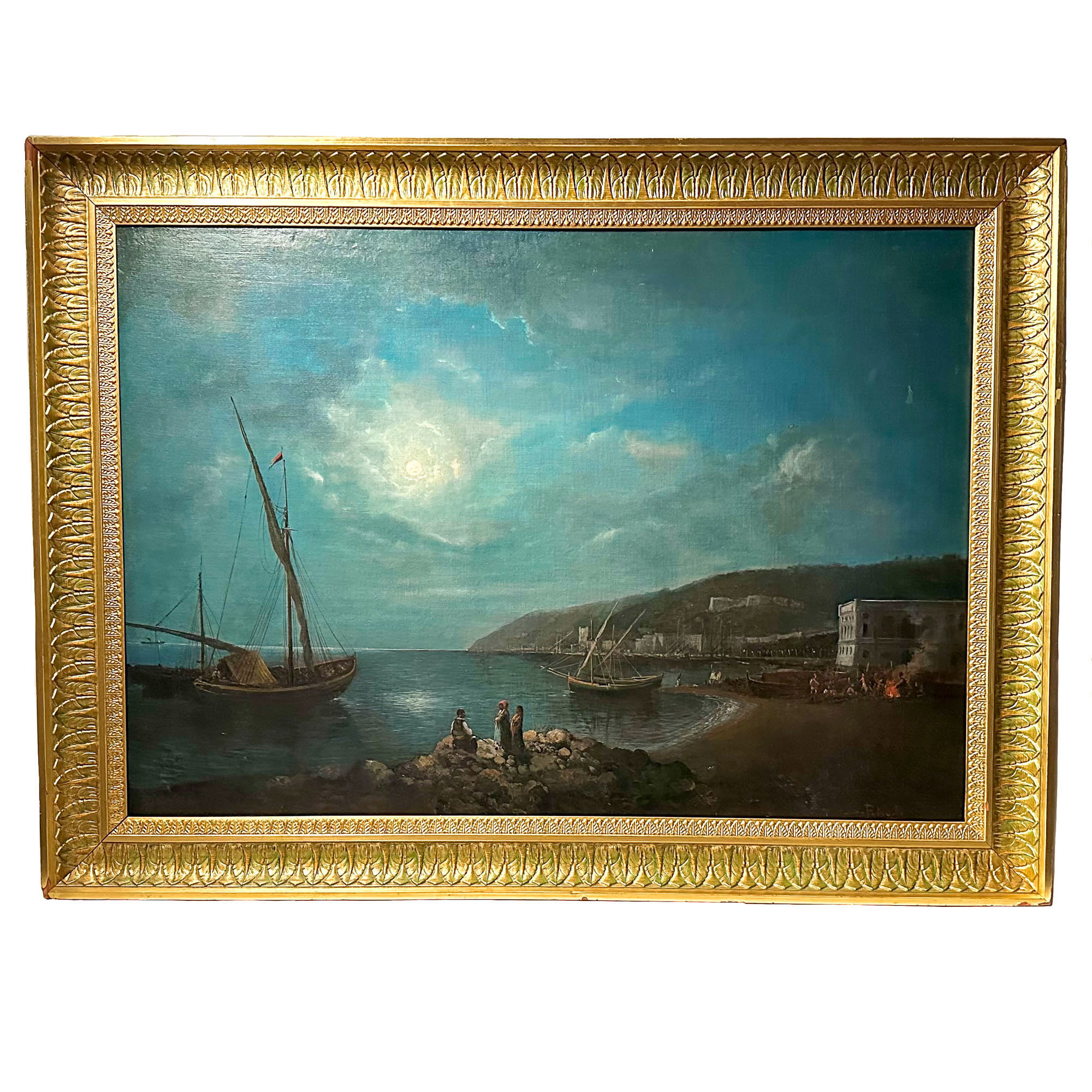
The transition to oil painting marks a crucial moment in the history of Western art. Already experimented with in the Middle Ages, oil became established in the 15th century thanks to Flemish painters such as Jan van Eyck, who explored its potential. Mixing pigments with an oily binder - usually linseed oil - results in a soft paste that is slow to dry and allows for soft shading, transparency, glazing, and afterthoughts.
This new flexibility was accompanied by an equally innovative medium: canvas. Lighter, cheaper, and more manageable than the wood panel, canvas gradually spread, especially in the Venetian area, thanks to Titian, Tintoretto, and Veronese, until it became the standard in later centuries. With oil on canvas, the artist gains unprecedented freedom, being able to construct the scene with greater realism, work by superimposition and achieve extraordinary lighting effects. The painting thus becomes more carnal, atmospheric, and expressive; however, this technique requires long times, care in preparing the surface, and great skill in handling the layers to prevent the work from cracking or deteriorating over time.
Oil on canva “Marina notturna”
S. Petruolo - Italy, 19th century
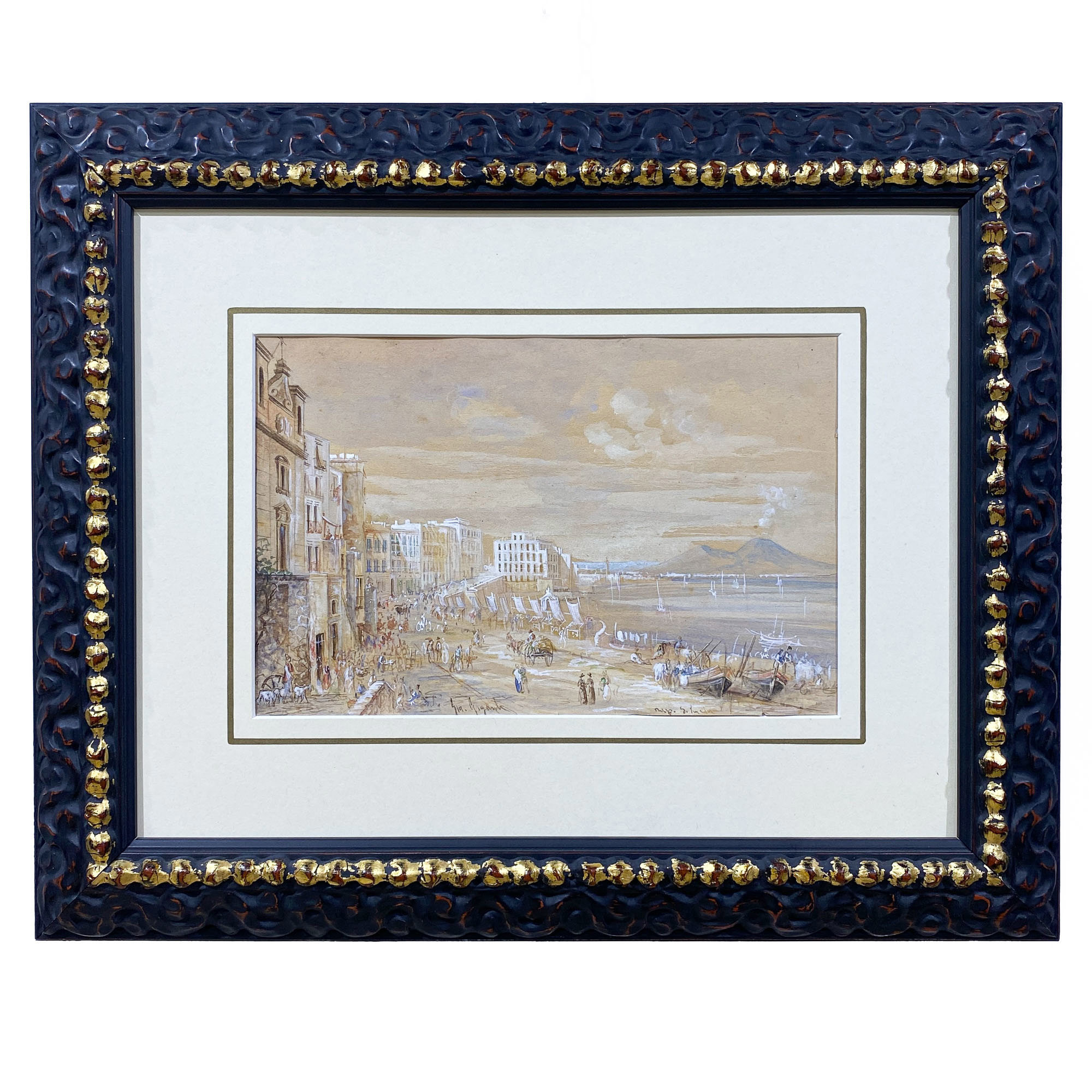
Watercolors offer an unprecedented immediacy. This technique has been used since antiquity for miniatures and codices, but it became an independent technique only from the eighteenth century onward. Watercolor is based on the application on paper of pigments diluted in water, exploiting the porosity of the medium to create effects of transparency and luminosity. Unlike oil or tempera, here the artist does not work by opaque overlay, but by subtraction, letting the paper's texture to act. It is a technique that does not allow for errors: every gesture must be measured, because it is not possible to correct or cover completely. Used for sketches, studies from life, landscapes and completed works of art, watercolor is favored by artists who place their attention on the rendering of atmosphere and movement. Light, quick, and transportable, this technique is well suited to capture the moment and the impression, but requires considerable mastery to achieve controlled and lasting results.
Watercolor on paper
G. Gigante - Italy, 19th century
 
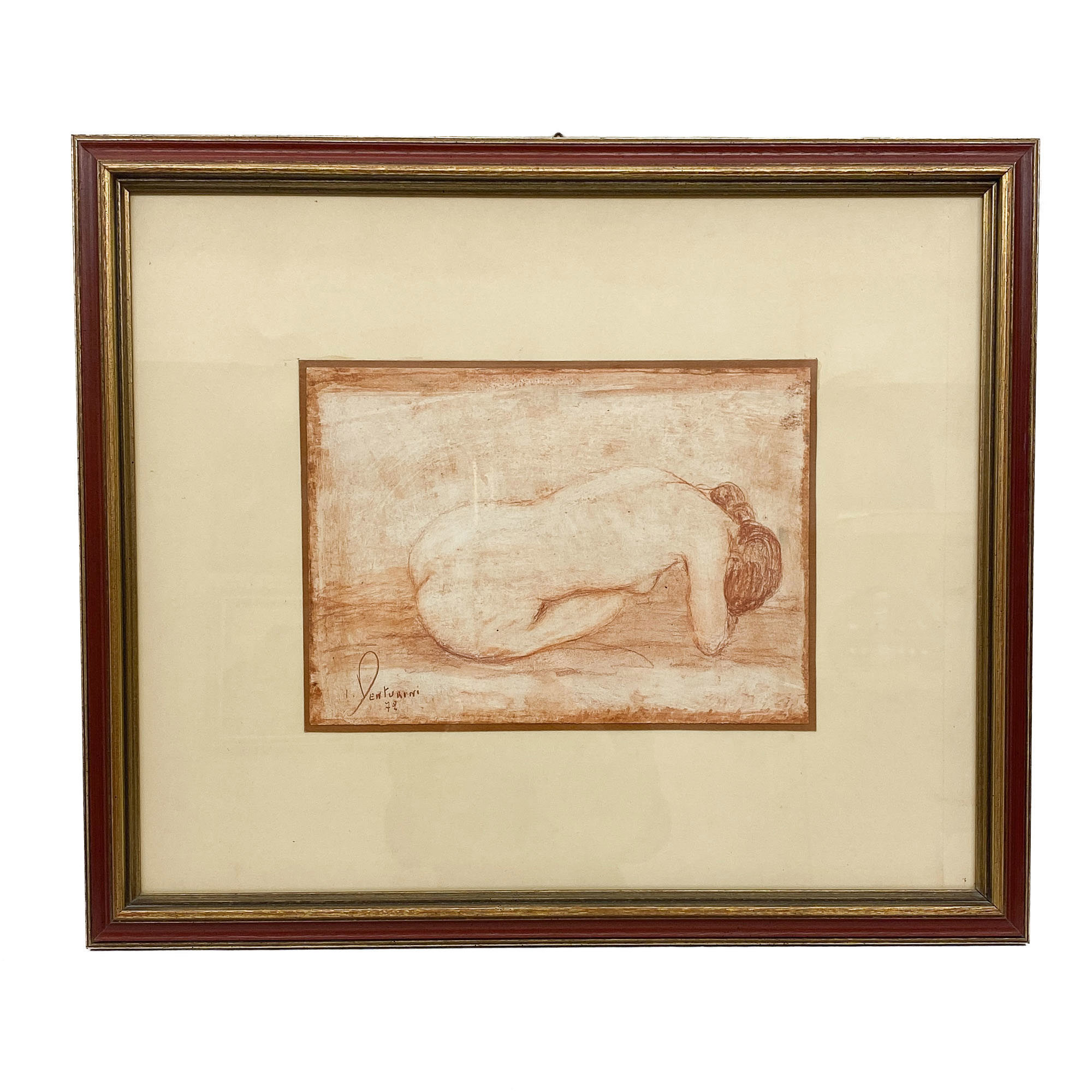
Sanguine on paper
I. Venturini - Italy, 1972
Sanguine is a technique with a subtle, old-fashioned charm that became particularly popular from the Renaissance onward for studies, portraits, and preparatory drawings. It is made using a natural ferrous stone, red-brown in color, which is worked into chalk-like sticks, used directly on paper or slightly rough supports. The name derives precisely from the warm color, similar to the tone of blood, which is ideal for bringing out flesh tones or building volume with a soft, modulating stroke. In fact, sanguine allows a great variety of expression: it can be used with a firm mark for sharp, incisive outlines, or blended with the fingers or a rag to create delicate tonal transitions. Although it is a fragile and light-sensitive technique, it retains a timeless elegance and testifies to the deep connection between drawing and the artist's thought.
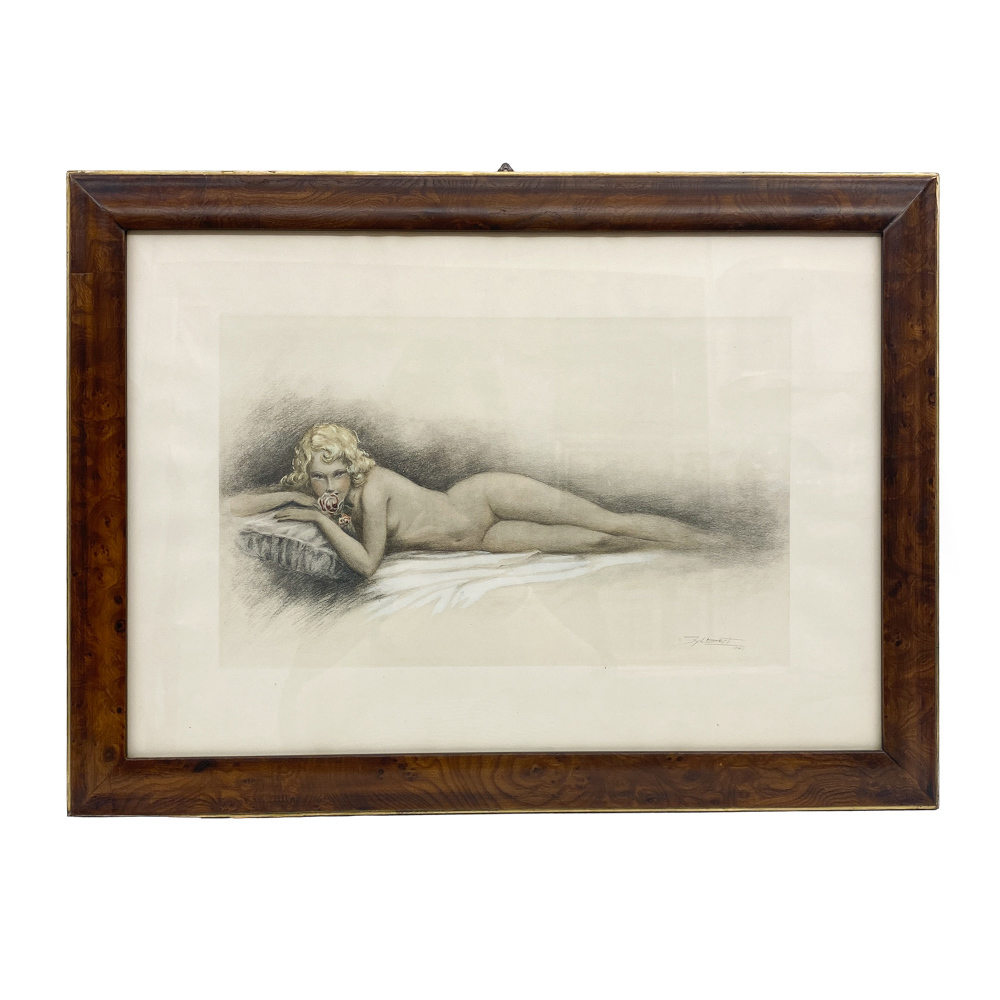
Alongside sanguine, another fundamental technique in drawing is charcoal on paper, one of the oldest and most direct forms of artistic expression that has maintained a central role over the centuries in the study of form and the construction of chiaroscuro. To create works with this technique charred sticks of wood, often willow or vine, are used.These produce a soft, opaque and velvety stroke that allows the artist to work for both lines as well as masses, with transitions from a bold mark to impalpable nuances, easily modulated with the fingers or special tools. Ideal for quick sketches or plant drawings, it was widely used in preparatory sketches and studies from life. Its dusty and unstable nature makes it delicate but, despite this, charcoal retains an immediate and powerful expressive power, capable of transmit the artist's gesture in all its intensity in a highly poetic way.
Charcoal on paper
1940s
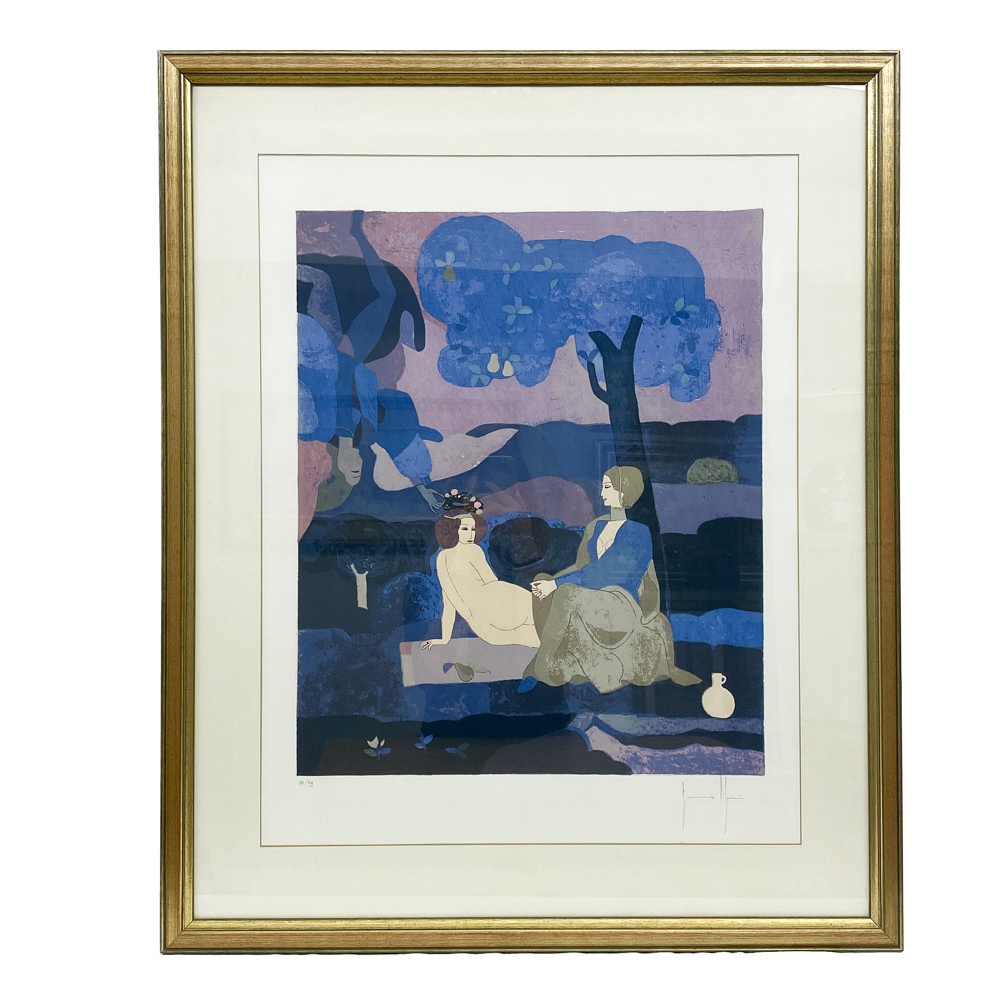
Out of techniques that arose in modern times, lithography, developed in 1796 by Alois Senefelder, deserves attention. It is based on a chemical principle: the incompatibility between water and fatty substances. The artist draws with a fat pencil on a slab of limestone; the undrawn areas are treated to repel the ink, while the drawn areas absorb it. The paper sheet is then pressed against the limestone to transfer the image. Unlike engraving, lithography is a planographic technique, which does not involve etching or relief, allowing greater freedom in stroke and graphic rendering. It played a key role in the dissemination of the artistic image in the nineteenth century, both for the production of popular prints as well as for works of art, and was able to unite art and mass communication.
Litography “Sogno, desiderio, serenità”
G. Ciferri - Italy, 1987
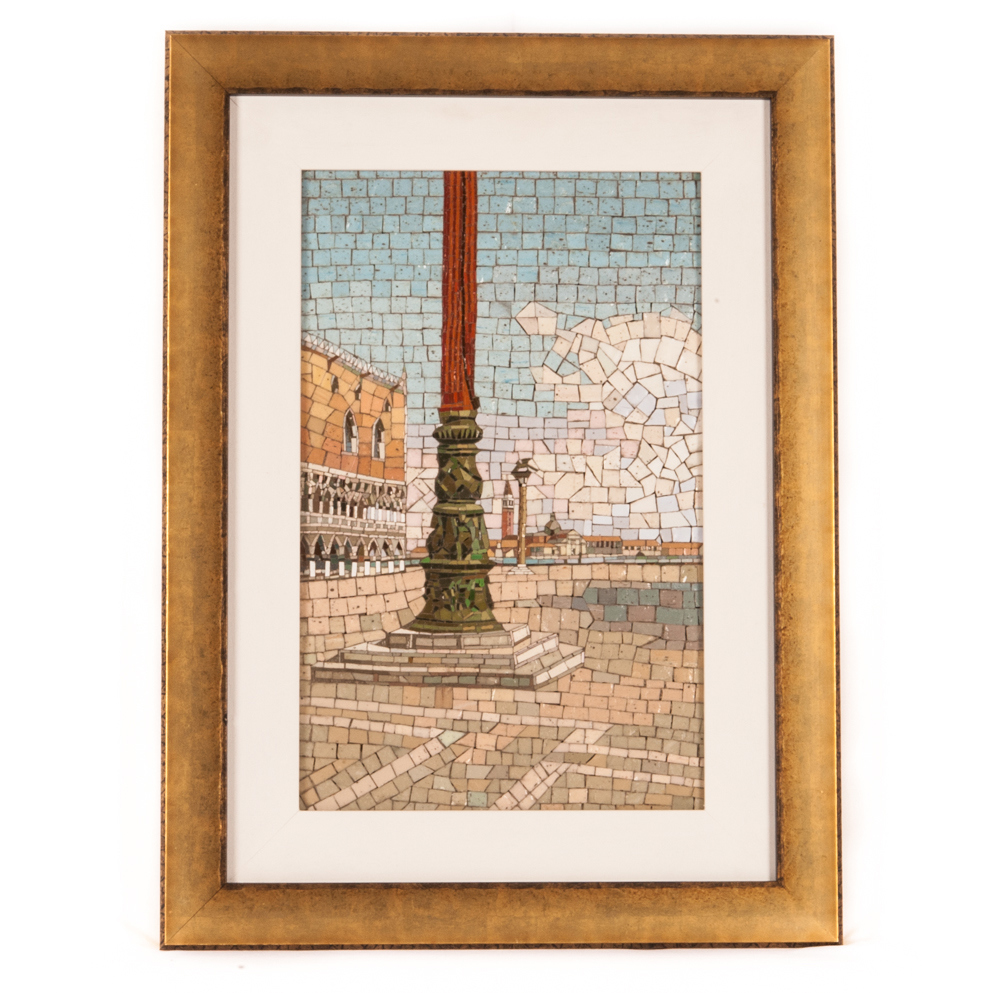
Murano glass mosaic
Pauly & C. - C.V.M. - Italy, 1920s
Mosaics are a unique case. While they can’t be defined as a pictorial technique in the strict sense, they fall fully within the realm of figurative representation. Composed of tiny stone, glass or ceramic pieces arranged in a pattern and fixed with mortar on a surface, mosaic is a very ancient technique, already present in Mesopotamia and later developed in Greece, Rome, Byzantium and beyond. Its main characteristics are durability and strength: mosaics survive centuries, decorating floors, walls, ceilings, and taking on both ornamental and narrative functions. While lacking softness and nuance, a mosaic manages to render powerful, solemn, symbolic figures. It requires great technical mastery and long lead times, but the result is permanent, monumental.
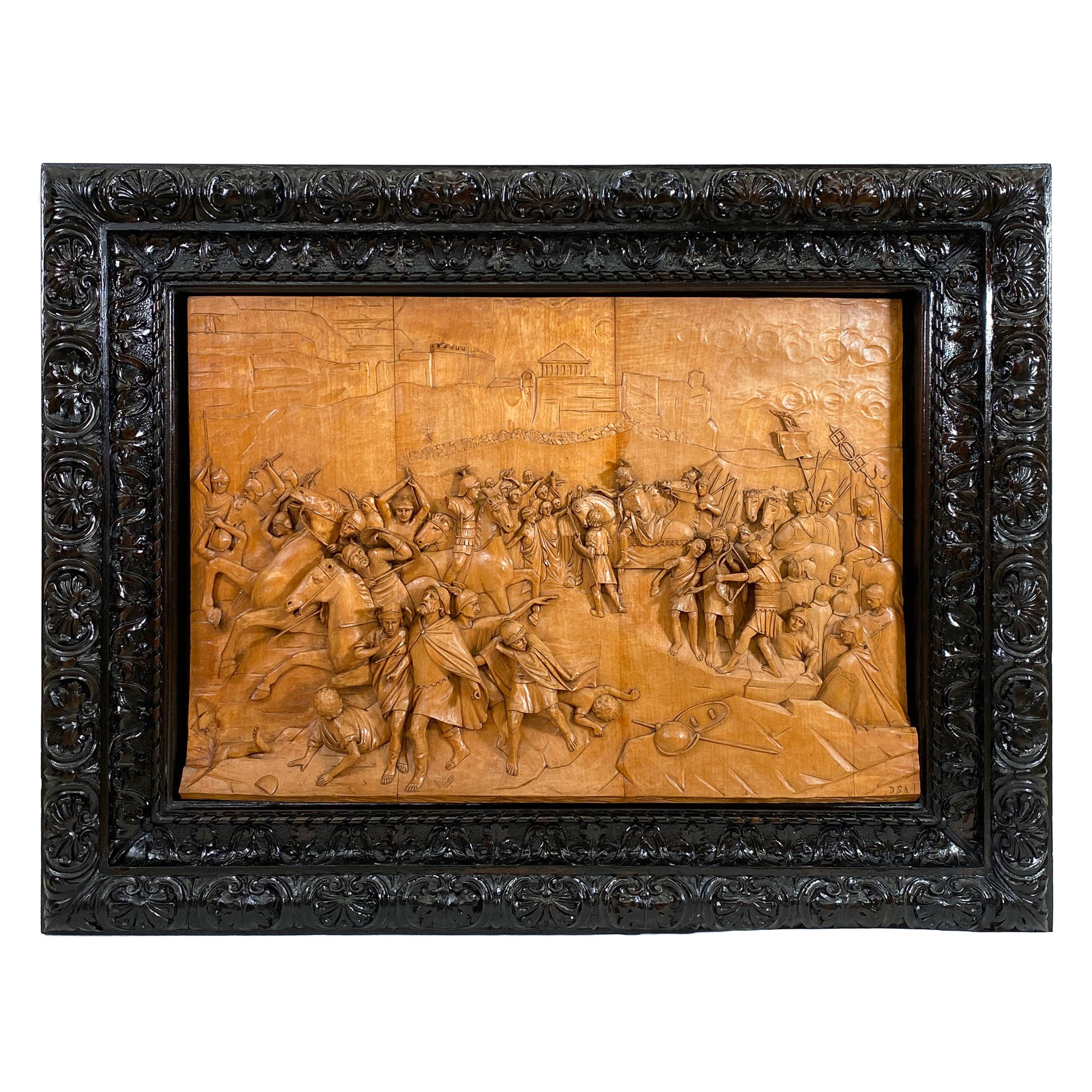
Finally, wood carving represents an art form that combines sculpture and painting. In past centuries, especially between the 14th and 16th centuries, it was popular to create altarpieces using this technique since their impact on the worshippers is certainly greater than that of a flat panel. These “three-dimensional paintings” are carved by skilled and experienced craftsmen who must be fully familiar with the material and have adequate tools and a high degree of precision. Undoubtedly less flexible than traditional painting, wood carving has the advantage of offering an unparalleled physical presence and corporeality, and because of this the viewer is able to feel emotionally involved firsthand with the scene depicted.
Lime wood high relief
A. Dal Santo - Italy, 1940s
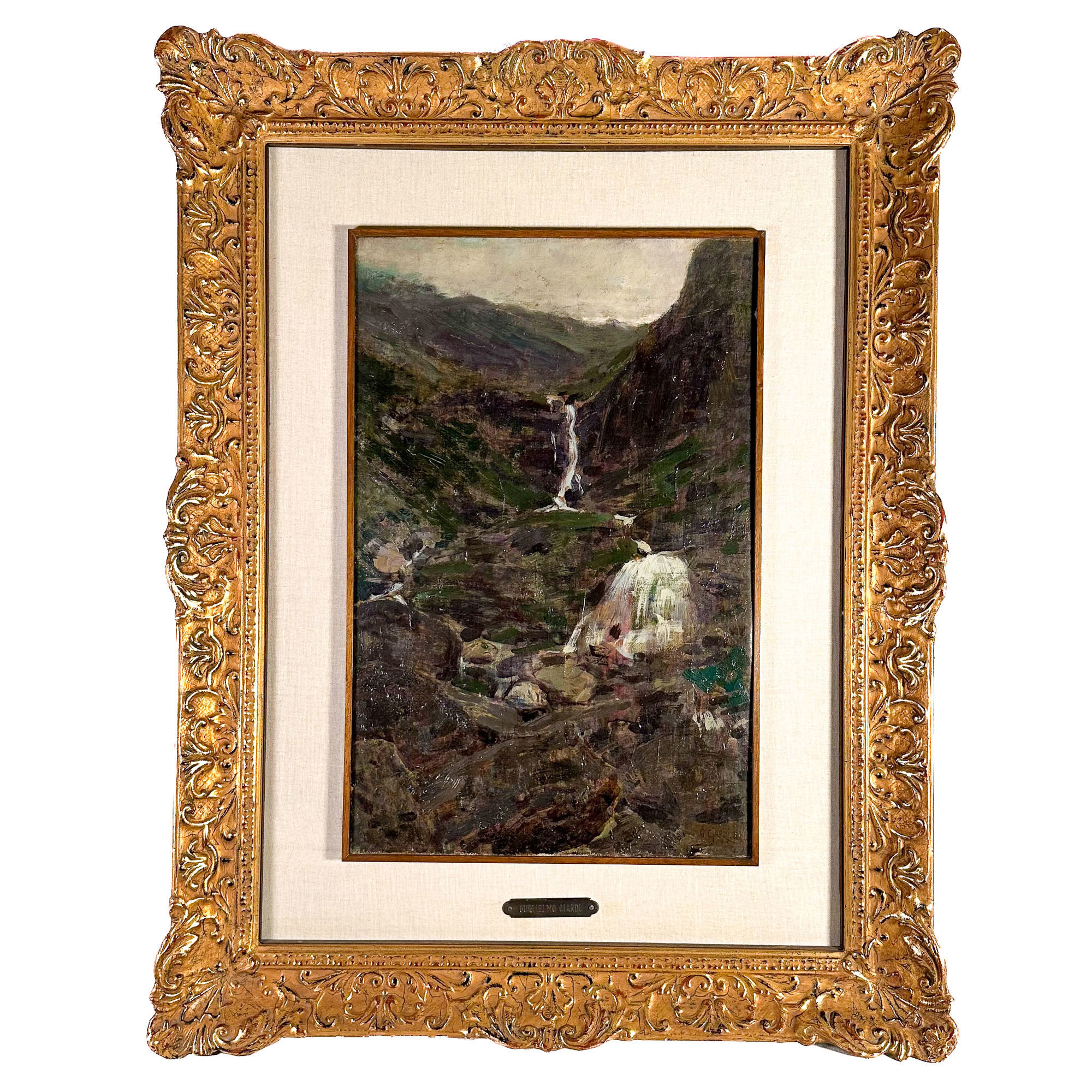
Oil on canvas “Sopra il Cornizzolo”
G. Ciardi - Italy, 1886
Art techniques are never neutral: each defines not only the appearance of a work, but also its meaning, its duration, and its relationship to the viewer. To know these techniques is to better understand the history of art and the choices made by artists. In each work, content and medium merge, transforming matter into vision.

Watch the video and discover all the secrets of the many painting techniques.

Become a Passionario

Chat with us